

50A RV Cords: Copper Gauge, Jacket Type, and Cold‑Weather Flex
If your rig uses a 50‑amp service (NEMA 14‑50), the right cord keeps your appliances running and your connectors cool. This guide explains how to pick a 50A RV cord by copper gauge, jacket type, and length—plus how to stay flexible in winter without fighting a stiff cable.
Quick answer: what most 50A RV owners should buy
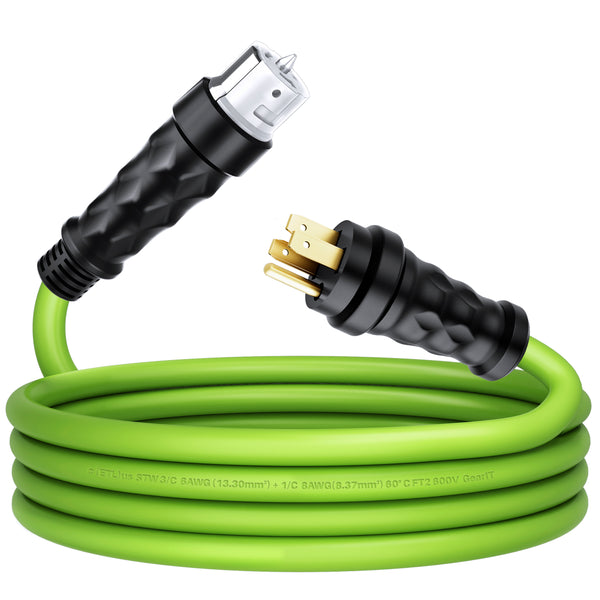
For typical campground hookups across the U.S., a heavy‑duty 50A NEMA 14‑50 cord built with 6/3 + 8/1 copper (6 AWG for the two hots and neutral, 8 AWG for ground) and a durable STW jacket is the dependable default. A 25–50 ft length covers most sites while keeping weight and voltage drop manageable. A straightforward example is the 50 Amp NEMA 14‑50 Heavy Duty Extension Cord, available in multiple lengths to match your typical pedestal distance.
How copper gauge works on 50A cords
On 50A RV cords you’ll commonly see “6/3 + 8/1.” That means:
- 6 AWG x 3 conductors: two hot legs (X and Y) and the neutral—each sized for full 50A service.
- 8 AWG x 1 ground: a slightly smaller but robust equipment ground.
Thicker copper lowers resistance, which helps minimize heat at the plug and voltage sag inside your RV. As length increases, resistance and voltage drop also increase, so it’s smart to keep the cord only as long as you typically need. For planning runs beyond 50 ft, use our Voltage Drop Calculator: Picking the Right Gauge by Length (30A/50A).
Jacket types compared: STW, SJTW, and SJEOW
The jacket protects the copper and affects flexibility—especially noticeable below freezing in the Mountain West, Upper Midwest, and Canada.
- STW (Thermoplastic, 600V): Thick, abrasion‑resistant, and common on 50A cords. Good UV and weather durability for year‑round campground use. Heavier and stiffer in deep cold.
- SJTW (Thermoplastic, 300V): Lighter duty than STW. You’ll see SJTW on general extension cords rather than 50A mains. Handles typical outdoor use but not as rugged as STW for heavy RV cords.
- SJEOW (TPE/Elastomer, 300V): Not typical for 50A mains, but excellent for accessory cords in freezing temps thanks to superior low‑temperature flexibility.
Need an extra cold‑flexible accessory cord for tools or heaters at the campsite? Consider a flexible TPE option like the 14/3 Outdoor Extension Cord (SJEOW). For general all‑season duties where cold isn’t extreme, a durable thermoplastic option such as the 14/3 SJTW Outdoor Extension Cord works well. For a deeper dive on jacket tradeoffs and storage, see Outdoor Use: STW vs SJTW Jackets, IP Ratings, and Storage.
Connector types you may encounter
- NEMA 14‑50 (straight blade): Standard 50A RV pedestal outlet in most U.S. campgrounds. A 14‑50 cord runs directly from pedestal to your rig’s inlet or to your surge protector.
- SS2‑50 (twist‑lock): Common on marine shore power and some generators. You may need an adapter when the pedestal or generator differs from your RV inlet.
Examples when adapters help:
- Connecting a 14‑50 outlet to gear with an SS2‑50 inlet: use a dedicated cord like the NEMA 14‑50P to SS2‑50R Twist‑Lock Extension.
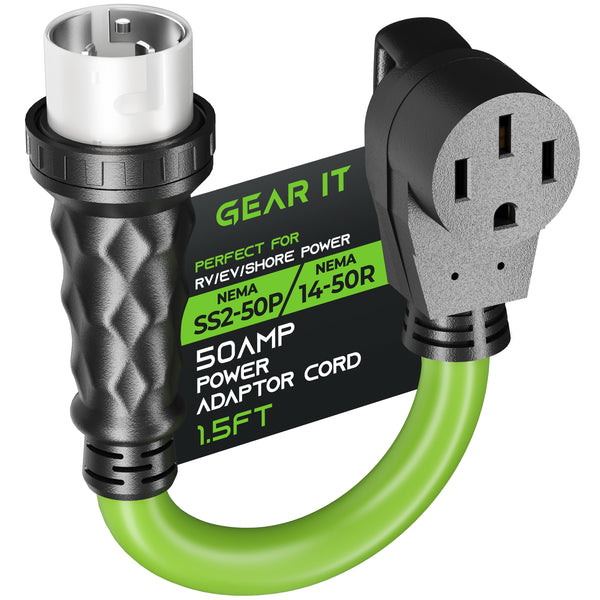
- Bridging from a twist‑lock SS2‑50 pedestal to your 14‑50 cord: carry a short adapter such as the SS2‑50P to 14‑50R Shore Power Adapter.
Before combining cords and dogbones, review Adapters and Dogbones: Safe Combinations and What to Avoid and walk through the basics in RV Power Basics: TT‑30 vs 14‑50 Explained with Use Cases. If your rig is 30A, choose a purpose‑built 30A cord such as the TT‑30 Extension Cord instead of a 50A cable.
Cold‑weather tips for flexible handling
- Warm the jacket before coiling: Lay the cord in the sun, bring it into a heated storage bay, or power it briefly (safely) to soften the jacket.
- Avoid tight bends below freezing: Keep large coil diameters and gentle curves to prevent jacket memory and strain on terminations.
- Minimize drag over rough surfaces: Snow and ice can abrade stiff jackets—lift and place instead of pulling.
- Store dry: Wipe connectors before stowing to keep blades clean. See Winterizing Your Power Gear: Inspection and Care for a seasonal checklist.
Length, voltage drop, and why shorter is usually better
Long runs add resistance that can lower voltage inside the RV during heavy loads (A/Cs, electric water heater, induction cooktop). As a rule of thumb, pick the shortest length that reliably reaches your typical pedestal—often 25 or 50 ft. If you routinely stretch farther, step up copper size where possible and regularly monitor plug temperature. Use our calculator to plan runs and loads: Voltage Drop Calculator: Picking the Right Gauge by Length (30A/50A).
Decision matrix: which 50A cord or adapter fits your setup?
Match your outlet, inlet, and conditions to the most practical option below.
| Option | When to choose it | Typical length | Jacket | Tradeoff |
|---|---|---|---|---|
| 14‑50P to 14‑50R Extension (50A) | Standard U.S. campground pedestal to RV with 14‑50 inlet; also common for home 14‑50 outlets. | 25–50 ft (longer available) | STW, 6/3 + 8/1 copper | Heavier to handle; stiffer in deep cold compared with lighter‑duty cords. |
| 14‑50P to SS2‑50R Twist‑Lock | Source has 14‑50 outlet but your gear uses SS2‑50 twist‑lock inlet (shore power style). | 10–25 ft | STW, 6/3 + 8/1 copper | Locks securely but adds one more connection; confirm pinout before use. |
| SS2‑50P to 14‑50R Adapter | Pedestal or generator offers SS2‑50 twist‑lock; your primary cord is 14‑50. | 1.5 ft | STW, 6/3 + 8/1 copper | Ultra short for minimal drop; keep connections off the ground. |
| TT‑30P to TT‑30R (30A) | Your RV is 30A service; or you need a lighter, shorter backup for smaller rigs. | 10–50 ft | STW, 10/3 copper | Not for 50A rigs; single hot leg limits total wattage. |
Safety, setup, and on‑site checks
- Inspect every connection: Look for discoloration, nicks, or looseness before energizing. If a plug feels hot in use, unplug and investigate. For quick diagnostics, see Troubleshooting Tripped Breakers and Hot Plugs.
- Use surge protection: Many campgrounds have fluctuating voltage. Learn when an EMS is worth it in Surge Protection for RVs: 30A vs 50A and When You Need EMS.
- Follow a hookup routine: A consistent process reduces mistakes. Walk through Campground Hookups Checklist: Before You Plug In before flipping breakers on.
EV charging on 14‑50 outlets
Many U.S. homes and some campgrounds offer 14‑50 outlets suitable for portable EV charging. A robust 14‑50 cord can extend reach from the outlet to your charging location—keep it as short as practical, and verify your EVSE’s current setting. For nuances like continuous‑load settings and cable routing, read EV Portable Charging with 14‑50 Outlets: Cable Considerations.
Care and storage
- Coil loosely: Use large loops and avoid kinks to preserve jacket integrity.
- Keep blades clean and dry: Wipe moisture and dust before storage; cap connectors if you have covers.
- Off‑season check: Inspect for cuts, flat spots, or softening at strain reliefs. Our seasonal checklist in Winterizing Your Power Gear: Inspection and Care walks you through it.
Frequently Asked Questions
Do I need a 6/3 + 8/1 copper build for a 50A RV cord?
Yes—50A RV service uses two 120V hot legs and a neutral that all carry significant current. A 6 AWG copper conductor for each hot and the neutral with an 8 AWG ground is the common, reliable configuration for full‑load use and durability.
Which jacket should I pick for winter camping?
For main 50A cords, STW is the rugged standard and handles year‑round weather. It’ll feel stiffer below freezing; mitigate this by choosing the shortest length you can, pre‑warming before coiling, and avoiding sharp bends. Use SJEOW for accessory extension cords where maximum cold‑weather flexibility matters.
How long can a 50A cord be before voltage drop becomes a problem?
It depends on load and copper size. Many RVers stay at 25–50 ft for everyday use and avoid daisy‑chaining. If you often run long and heavy loads (A/Cs, electric cooking), plan with the Voltage Drop Calculator and monitor plug temperature.
Can I use my 50A RV cord for portable EV charging?
Yes, if you’re charging from a 14‑50 outlet and your EVSE supports it. Keep the run short, fully uncoil the cord for ventilation, and confirm the EVSE’s amp setting. For details, see EV Portable Charging with 14‑50 Outlets: Cable Considerations.
Next steps
If your campsite power is a standard 14‑50 pedestal, start with a rugged main cord like the 50 Amp NEMA 14‑50 Heavy Duty Extension Cord. If you sometimes face twist‑lock pedestals or generator outlets, add a targeted connector solution such as the 14‑50P to SS2‑50R Twist‑Lock or the compact SS2‑50P to 14‑50R Adapter. For a smooth setup at unfamiliar parks, bookmark the Campground Hookups Checklist.