

Winterizing Your Power Gear: Inspection and Care
Cold snaps expose weak links in power setups. Before the first freeze in your area (often October–November across much of the U.S., earlier in the Mountain West and Alaska), give your cords, adapters, surge protection, and portable power a focused check. This guide prioritizes safety, reliability, and simple upkeep so your tools, RV, and backup power stay ready all winter.
Quick Start: What to Check Before the First Freeze
- Cord jackets: Look for cuts, flat spots, brittleness, or deep kinks—replace anything that shows copper or cracked insulation.
- Plugs and receptacles: Inspect blades for discoloration, pitting, looseness, or melted plastic. Warm or wobbly plugs indicate wear.
- Strain reliefs and gaskets: Confirm tight, intact molding where the cord meets the plug; on weather covers, verify a positive seal.
- Labels and ratings: Match gear to the job: amperage (15A/30A/50A), jacket type (SJTW, SJEOW, STW), and NEMA pattern (TT‑30, 14‑50, L5‑30).
- Continuity and fit: If a plug runs hot or trips breakers, diagnose before winter trips. See Troubleshooting Tripped Breakers and Hot Plugs.
Pick the Right Jacket for Cold Weather
Jacket material affects flexibility, abrasion resistance, and cold‑weather performance. If you work outside through winter—or you’re storing gear in unheated garages—SJEOW jackets stay more flexible in sub‑freezing temps than general‑purpose options.
For a deeper primer on terminology and IP splash protection, see Outdoor Use: STW vs SJTW Jackets, IP Ratings, and Storage.
Cold‑Weather Jacket Comparison
Use this table to match jacket types to winter tasks.
| Jacket Type | Cold Flexibility | Abrasion/Jobsite | Typical Use | Trade‑off |
|---|---|---|---|---|
| SJEOW | Excellent in sub‑freezing temps | Good | Outdoor tools, generators, long runs in winter | Slightly heavier cost vs SJTW |
| SJTW | Moderate in cold | Good | General outdoor cords, seasonal yard tools | Stiffer below freezing |
| STW | Good | Very good | High‑amp RV/generator cords | Heavier; less flexible in deep cold than SJEOW |
If you routinely see snow or ice in the Midwest, Northeast, or Mountain regions, a cold‑flex cord reduces kinks and plug stress. A rugged option for long winter runs is the 10/3 SJEOW 100 ft triple‑outlet extension cord, which stays pliable and visible in low‑light jobsites.
Holiday Lighting and Outdoor Yard Power
For holiday displays and light yard tools, route cords above standing water and use in‑use covers where applicable. A flat, rotating plug reduces strain behind furniture or timers inside the home. For tight indoor/outdoor setups, a compact option is the 360° rotating flat‑plug extension cord, which helps keep plugs flush and cables tidy around doors and decorations.
RV Winter Readiness: Power Pedestals and Protection
Cold weather can mask pedestal wiring issues until you plug in. Always test power quality and add surge protection before energizing your RV.
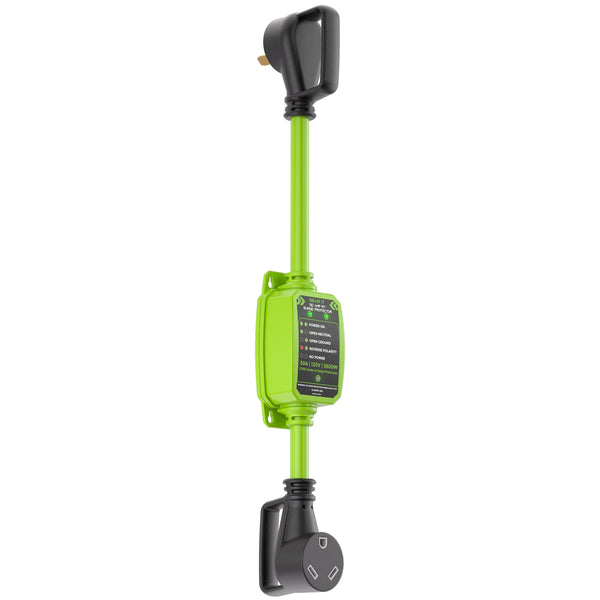
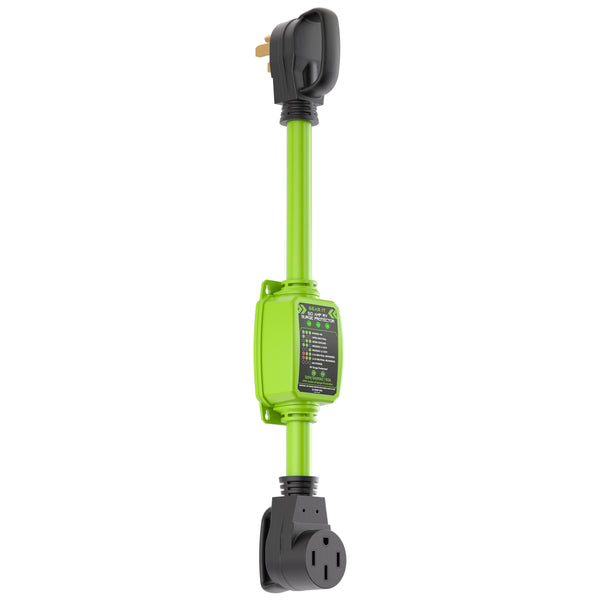
- 30A rigs: A plug‑in analyzer with joule protection helps catch reverse polarity, mis‑wiring, and spikes. Consider the 30‑Amp RV Surge Protector (2700J) for winter weekenders and shoulder‑season camping.
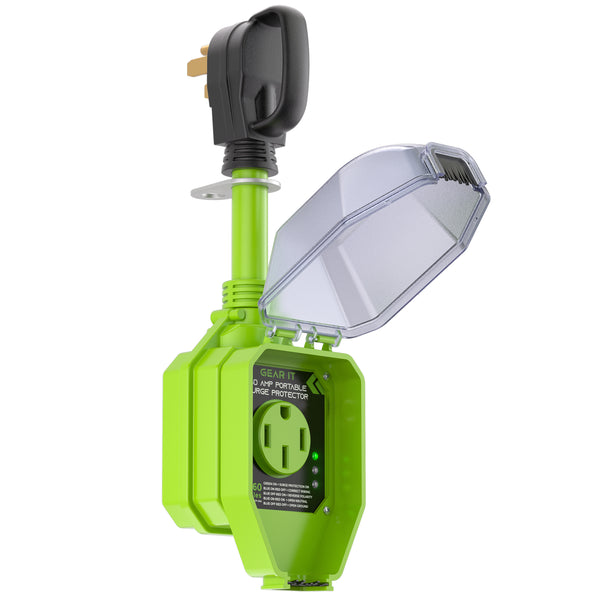
- 50A rigs: If you split loads across legs, use a protector designed for 50A pedestals. For added visibility and weather shielding, see the 50‑Amp RV Surge Protector (4100J) with weatherproof cover. For diagnostic readouts, a circuit‑analyzer style protector helps identify sag or pedestal faults; see 50‑Amp Circuit‑Analyzer Surge Protector.
Not sure which amperage you have? This explainer will help you match plugs, loads, and campsites: RV Power Basics: TT‑30 vs 14‑50 Explained with Use Cases. For a surge deep‑dive, see Surge Protection for RVs: 30A vs 50A and When You Need EMS. Before you plug in at a new site, run through the Campground Hookups Checklist: Before You Plug In.
Generator and Shore‑Power Cords: Length, Gauge, and Cold
Long winter runs increase resistance and voltage drop, which can stress heaters and RV appliances. Choose heavy‑gauge cords sized to the amp draw and distance. If you use portable generators for outages or tailgate heaters, confirm your NEMA pattern and gauge.
- 30A RV extension: A durable TT‑30 line handles typical single‑leg RV loads; see the 30‑Amp TT‑30P to TT‑30R 10/3 STW extension cord for winter camping and driveway power.
- Generator adapter: If your generator uses a locking outlet, a short adapter whips power to your RV inlet; see the TT‑30P to L5‑30R generator power cord when your setup requires a secure twist‑lock.
To plan runs by distance and amperage, use the on‑site tool: Voltage Drop Calculator: Picking the Right Gauge by Length (30A/50A). For what each locking connector powers (L14‑30 vs L5‑30) and reasonable run lengths, see Generator Cords: L14‑30 and L5‑30—What They Power and How Far.
Adapters and Dogbones: Use Sparingly and Safely
Winter surfaces are wet and icy. Every extra connection adds resistance and potential heat at the plug. Keep chains short, dry, and protected from puddles and snowbanks. For compatible pairings—and what to avoid—review Adapters and Dogbones: Safe Combinations and What to Avoid.
Storage: Coiling, Drying, and Labeling
- Dry first: Wipe cords clean, then air‑dry before storage. Moisture under jackets can track into plugs in a freeze/thaw cycle.
- Over‑under coil: This method reduces twist memory, especially on SJEOW cords in the cold. Secure with a soft strap—not tight zip ties.
- Off the floor: Store on a wall hook or reel in a shed or garage. Avoid direct concrete where condensation forms.
- Label by amperage/length: Mark “10/3 100 ft,” “TT‑30,” or “14‑50” so you grab the right cord with gloves on.
Moisture and In‑Use Protection
Where snow and rain are common—Pacific Northwest, Great Lakes, New England—use covers at outlets and keep connections elevated. If you must join cords, elevate the connection under a drip loop. For yard displays or exterior shops, review basic protection in Outdoor Use: STW vs SJTW Jackets, IP Ratings, and Storage.
Battery Backups and Small Electronics
Phones and small devices lose charge faster in the cold. Keep a compact pack inside your coat or a heated pocket. A travel‑friendly option with magnetic alignment is the 2‑in‑1 MagSafe Wireless 10,000mAh Power Bank for winter errands and road trips.
Signs It’s Time to Replace a Cord
- Visible copper, deep nicks, or a crackling sound when flexed
- Discolored blades, loose receptacles, or a plug that runs hot to the touch
- Frequent nuisance trips or intermittent power under light load (inspect connections first)
- Severe stiffness below 32°F that causes kinking or plug strain
Regional Timing Tips (U.S.)
- Northern Rockies/Upper Midwest/Interior Northeast: Finish inspections by late September. Choose SJEOW for outdoor runs.
- Mid‑Atlantic/Pacific Northwest: Expect prolonged wet conditions. Prioritize in‑use covers and raised connections.
- South/Southwest: Fewer freezes, but big rain swings. Focus on surge protection and rodent‑safe storage.
Before You Plug In: A Simple Winter Checklist
- Match NEMA pattern and amperage to the circuit or pedestal (review with TT‑30 vs 14‑50).
- Confirm cord jacket type fits the temperature range you expect (see jacket table above).
- Add surge protection appropriate to 30A or 50A rigs (when you need EMS).
- Plan cord length and gauge with the Voltage Drop Calculator.
- At camp, run through the Hookups Checklist before energizing.
Frequently Asked Questions
Do I really need a cold‑weather (SJEOW) cord if I only use power occasionally in winter?
If temps dip below freezing and you coil/uncoil cords a few times each season, SJEOW saves time and reduces damage risk. For mild climates with short runs, a quality SJTW can be sufficient—just expect it to feel stiffer on cold mornings.
Should I upsize gauge for winter?
Long runs and heaters draw steady current that amplifies voltage drop in cold conditions. If your run approaches 50–100 ft, consider a heavier gauge (12/3 or 10/3) and verify with the on‑site Voltage Drop Calculator.
What surge protection makes sense for a weekend winter trip?
For 30A rigs, a compact diagnostic protector adds fast peace of mind; see the 30‑Amp RV Surge Protector (2700J). For 50A, pick a unit rated for both hot legs; see the 50‑Amp RV Surge Protector (4100J).
Are adapter “chains” okay in winter?
Keep them to a minimum. Each junction is a potential hot spot—especially if snow or ice adds moisture. If you must adapt, choose a single, properly rated piece and review safe pairings in Adapters and Dogbones: Safe Combinations and What to Avoid.
Next Steps
Pick one area to shore up before the season: swap in a flexible cold‑weather cord for your longest run, add a right‑sized RV surge protector, or tidy storage so gear dries fully. If you’re planning generator use, browse the planning guides first—start with Generator Cords: L14‑30 and L5‑30—What They Power and How Far—then confirm gauge with the Voltage Drop Calculator. A few small tweaks now mean fewer surprises when the forecast turns.