

EV Portable Charging with 14‑50 Outlets: Cable Considerations
Charging an EV from a NEMA 14‑50 outlet is a practical way to add Level 2 charging at home and at many U.S. campgrounds. This guide explains how to choose the right extension and adapter cables so you get reliable charging without hot plugs, nuisance trips, or unexpected slowdowns.
What a 14‑50 Outlet Delivers for EVs
A NEMA 14‑50 receptacle provides 120/240 V split‑phase power on a 50‑amp branch circuit. Most portable EVSEs that plug into 14‑50 draw 32–40 A depending on the model and vehicle. Treat EV charging as a continuous load: set your current to the lowest rating in your chain (outlet, breaker, EVSE, any extension/adapter). If you’re heading to a campground, confirm the pedestal type ahead of time and run through a quick pre‑plug check like Campground Hookups Checklist: Before You Plug In.
Cable factors that most affect charge reliability
Conductor gauge and construction
For a full 50‑amp circuit, look for cords using 6 AWG hot conductors with a dedicated ground—often labeled 6/3 + 8/1 (two hots and neutral in 6 AWG, ground in 8 AWG). That copper size keeps resistance and heat in check at 32–40 A, especially on outdoor runs. Molded connectors with solid strain relief and easy‑grip handles are easier on outlets you plug and unplug frequently. A heavy‑duty 14‑50 extension such as 50 Amp NEMA 14‑50 Heavy Duty Extension Cord, Green uses 6/3 + 8/1 conductors and molded grips to reduce plug stress.
Jacket type and outdoor durability
For travel and outdoor use, STW jackets balance abrasion resistance, UV stability, and flexibility across seasons better than lighter indoor jackets. High‑visibility colors help avoid trip hazards at night. For a deeper dive on jacket ratings and storage, see Outdoor Use: STW vs SJTW Jackets, IP Ratings, and Storage, and for cold‑season handling tips, skim Winterizing Your Power Gear: Inspection and Care.
Length vs. voltage drop
Longer cords add resistance, which lowers voltage and warms connectors. Keep extensions as short as your setup allows, route them fully uncoiled, and match gauge to distance. If you’re planning runs beyond ~25–50 ft, run the numbers with the Voltage Drop Calculator: Picking the Right Gauge by Length (30A/50A) and be ready to lower your EVSE current if plugs feel warm.
Decision matrix: match your cable plan to your scenario
Use this compact table to pick a practical cable setup for common 14‑50 charging scenarios in the U.S.
| Use case | Typical EVSE draw | Cable gauge & jacket | Practical extension length | Notes |
|---|---|---|---|---|
| Home garage to driveway | 32–40 A | 6/3 + 8/1 copper, STW | 10–30 ft | Keep cords uncoiled; check plug temperature after the first session. |
| RV park pedestal to parking spot | 32–40 A | 6/3 + 8/1 copper, STW | 25–50 ft | High‑visibility jacket reduces trip risk; confirm pedestal breaker rating. |
| Marina pedestal using SS2‑50 | 32–40 A | 6 AWG equivalent, STW adapter | 1.5–25 ft (adapter + short extension) | Use a locking shore‑power adapter to reach your 14‑50 EVSE input. |
| Shared driveway or street parking | 28–32 A | 6/3 + 8/1 copper, STW | 50–75 ft | Expect more voltage drop; reduce current if connectors feel warm. |
Adapter scenarios you may encounter
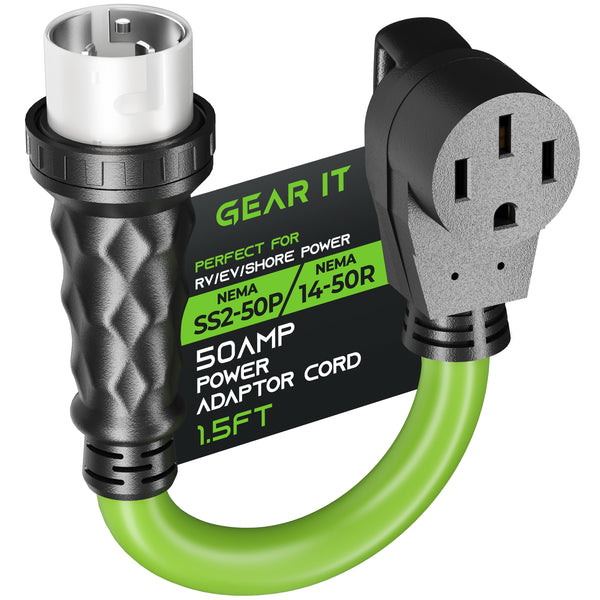
- Shore‑power pedestal (SS2‑50P): When the pedestal offers a locking SS2‑50 outlet, a short, heavy‑duty adapter like NEMA SS2‑50P to 14‑50R Shore Power Adapter (1.5 ft) creates a secure transition to your EVSE’s 14‑50 plug while keeping added resistance low.
- Preferring a locking connection at the vehicle end: If you want twist‑lock strain relief on the cord set, NEMA 14‑50P to SS2‑50R Adapter Extension (1.5 ft) provides a locking female for a firm, stay‑put connection.
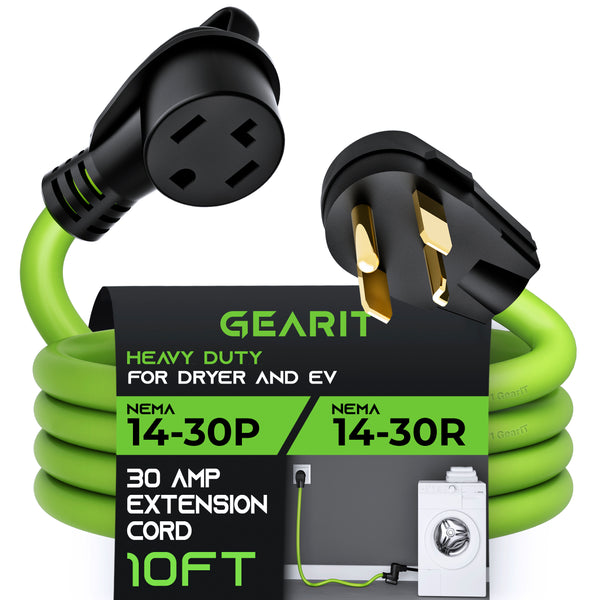
- Charging from a 30‑amp dryer circuit (NEMA 14‑30): For occasional charging at 24 A, use a dedicated 30‑amp cable like 30‑Amp NEMA 14‑30P to 14‑30R EV Power Cable and cap your EVSE current accordingly. For 30A vs 50A context, see RV Power Basics: TT‑30 vs 14‑50 Explained with Use Cases.
- Sharing with RV loads: If a 14‑50 must serve an RV and an EV, use a purpose‑built splitter and time‑share loads. For RV circuits, a product like 14‑50P to Dual TT‑30R Splitter is designed for RV power; avoid chaining adapters and monitor total current. For safe combinations, read Adapters and Dogbones: Safe Combinations and What to Avoid.
- Dryer outlet flexibility: Some homes use a 14‑30 but need two receptacle types occasionally; a compact option like 14‑30P to 14‑30R + 14‑50R Splitter can simplify plug‑in logistics. Always limit current to 24 A on the 30‑amp circuit.
Setup and safety checklist
- Match ratings end‑to‑end: Receptacle, breaker, EVSE, cords, and adapters should all meet or exceed your intended charge current.
- Keep it short and uncoiled: Shorter, heavier‑gauge cords reduce heat. Fully uncoil extensions during charging.
- Inspect connectors: Look for discoloration, looseness, or melting. If a plug feels uncomfortably warm, pause, let it cool, and reduce current. For diagnostics, see Troubleshooting Tripped Breakers and Hot Plugs.
- Protect from pinch and puddles: Avoid door thresholds, sharp bends, and standing water. Elevate connections in wet weather.
- Plan for weather and storage: STW jackets handle summer sun and winter cold well. For off‑season care, review Winterizing Your Power Gear: Inspection and Care.
Real‑world setups and when our cables fit
- Driveway charging from a garage 14‑50: A short, heavy‑duty extension like 50 Amp NEMA 14‑50 Heavy Duty Extension Cord, Green makes it easier to reach the port without reshuffling cars daily.
- EV charging at a marina: Many U.S. marinas use SS2‑50 locking outlets. Pair your EVSE with the SS2‑50P to 14‑50R Shore Power Adapter for a short, robust transition.
- Travel charging near campsites: Where you want extra strain relief, the 14‑50P to SS2‑50R Adapter Extension helps keep connections from working loose overnight.
- Occasional charging from a 14‑30 dryer outlet: Use the 30‑Amp NEMA 14‑30 EV Power Cable and cap your current to 24 A to stay within the circuit limit.
Frequently Asked Questions
What gauge cable should I use for a 14‑50 EV setup?
For 32–40 A portable EVSEs on a 50 A circuit, choose a 6 AWG (6/3 + 8/1) copper STW extension with molded connectors. Lighter gauges raise heat and voltage drop, especially beyond 25–30 ft.
How long can my 14‑50 extension be before it hurts charging?
Keep extensions as short as possible. Many drivers stay within 25–50 ft for 32–40 A charging. If you must go longer, use 6 AWG copper and consider lowering EVSE current. To estimate impact, try the Voltage Drop Calculator.
Can I split a 14‑50 to power an RV and charge an EV at once?
It’s possible with purpose‑built splitters, but you must manage total load so it never exceeds the source circuit. Prefer time‑sharing higher‑draw loads and avoid chains of adapters. See Adapters and Dogbones: Safe Combinations and What to Avoid for examples.
Do I need special adapters at campgrounds or marinas?
Many U.S. campgrounds provide a 14‑50 directly; others use SS2‑50 shore power. Bring a short, heavy‑duty adapter—such as an SS2‑50P to 14‑50R—and verify the pedestal breaker rating before you plug in. A quick walk‑through like Campground Hookups Checklist helps avoid surprises.
Next steps
Measure the exact distance from outlet to charge port, choose the shortest heavy‑duty cord that reaches cleanly, and plan for weather. For outdoor durability basics, read STW vs SJTW Jackets, then estimate distance impact with the Voltage Drop Calculator. If you ever encounter warm connectors or breaker trips, use Troubleshooting Tripped Breakers and Hot Plugs to isolate the cause before your next session.