

If your Ethernet connection is slow, dropping, or dead, this practical workflow helps you isolate the fault, validate it with quick tests, and choose a reliable fix. It’s written for home labs, small offices, classrooms, and AV racks in the U.S.—so you can go from symptom to solution with confidence.
Start Here: Match the Symptom to the Likely Cause
- No link light at all: Often a bad patch cable, miswired RJ45, unpowered switch/port, or damaged wall jack.
- Link flaps on and off: Common with loose latches, intermittent breaks, crushed or over‑bent cable, or EMI from nearby power lines and motors.
- Very slow speeds or buffering: Frequently a speed/duplex mismatch, under‑spec cable category, or excessive untwist near the plug that increases crosstalk.
- PoE device won’t power or reboots under load: Check PoE class/budget, total run length, and copper quality; marginal cable shows up when current increases.
Step‑by‑Step Test Workflow
- 60‑second visual check: Verify each plug clicks into place, boots aren’t split, and there’s no crushing or water ingress. Avoid sharp 90° bends; keep gentle curves. For bend‑radius trade‑offs under rugs or tight spaces, see Flat vs Round Ethernet: Bend Radius, Under‑Carpet Runs, and Trade‑offs.
- Swap test with a known‑good patch: Replace the suspect lead with a high‑quality Cat6. Keeping a small multi‑pack makes this easy; a spare set like the Cat6 Ethernet Patch Cable 10‑Pack speeds isolation for desks and IoT gear.
- Continuity and pinout: Use a basic cable tester to confirm straight‑through wiring (T568A‑to‑T568A or T568B‑to‑T568B), no opens/shorts, and no split pairs. If you’re weighing field termination versus premade spares, see Bulk Cable vs Pre‑Made Patch: Termination Tools and Cost Worksheet.
- Port isolation: Move the same cable to a different switch port or jack. If it works elsewhere, the original port or keystone likely needs re‑termination or replacement.
- Speed/duplex verification: Set both ends to Auto‑Negotiation. Forcing mismatched settings often creates 10/100 fallback and CRC errors. Planning a speed upgrade? Compare options in Cat6 vs Cat6a vs Cat8: Pick the Right Cable for 1G, 2.5G, 5G, and 10G.
- PoE validation (if used): Check injector/switch watt budget versus device class. If the link is stable with PoE off but fails under power, suspect voltage drop or cable quality. For planning cameras and APs, review PoE and PoE+: Cable Gauge and Distance Planning for Cameras and APs.
Physical Layer Pitfalls You Can Fix Fast
1) Miswired or inconsistent RJ45 pinouts
Use the same standard on both ends (T568A or T568B). Keep each pair’s twist to within about 0.5 inch of the contacts to limit crosstalk.
- Test it: A tester should read 1→1 through 8→8 with no splits or shorts.
- Fix it: Re‑terminate with a quality crimp and new plug, following the color code precisely. For frequently repatched desktops or racks, a flexible soft‑boot patch like Cat6 soft‑boot patch (blue) helps maintain secure latching in crowded panels.
2) Cable category limits and copper quality
Under‑spec cable can bottleneck new gear. Cat5e usually handles 1 GbE; Cat6 adds headroom for busy LANs and can support 2.5/5GBASE‑T on short, clean runs. Pure‑copper conductors handle power and distance better than low‑cost alternatives.
- Test it: If swapping to a known‑good Cat6 patch restores performance, upgrade that segment.
- Fix it: For everyday U.S. home/office use, a snagless pure‑copper Cat6 patch such as the Cat6 Snagless Patch Cable (pure copper) provides dependable headroom.
- Plan ahead: For 1G vs 2.5G/5G/10G targets, see Cat6 vs Cat6a vs Cat8: Pick the Right Cable for 1G, 2.5G, 5G, and 10G.
3) Bend radius, strain, and installation mistakes
Crushed cable, tight staples, or over‑bending disturb pair geometry and raise error rates. Flat cable can help under carpet but is less tolerant of repeated bending. For a quick primer on trade‑offs, see Flat vs Round Ethernet: Bend Radius, Under‑Carpet Runs, and Trade‑offs.
- Test it: Straighten the run, remove sharp bends, and retest for stability.
- Fix it: Route with wide curves and add strain relief. If repeated flex is unavoidable, prefer stranded, snagless patch cords.
4) Environmental noise and EMI
Running Ethernet parallel to AC mains, ballasts, dimmers, or motors can inject noise. Keep separation, avoid long coils, and consider shielding where appropriate. For home setups, start with Shielded vs Unshielded (S/FTP vs UTP): How to Reduce Interference at Home. For factories and stages, see Industrial Ethernet Quick Start: Picking Cable for Noisy Environments and consider rugged connectors as discussed in EtherCON and Pro Audio Networking: When Ruggedized RJ45 Makes Sense.
How to Verify RJ45 Pinout the Right Way
- Know the standards: T568A and T568B specify conductor order. Consistency on both ends—more than the choice of A vs B—keeps links stable.
- Use a tester: Check continuity, opens, shorts, and split pairs. Basic mappers are fine for field checks; certifiers add performance margin data.
- Re‑crimp if needed: If any pin fails, cut, re‑strip, keep twists tight, crimp a fresh plug, and retest. Need pre‑made spares for teams or classrooms? The Cat6 Ethernet Patch Cable 100‑Pack reduces downtime during roll‑outs.
PoE‑Specific Troubleshooting
- Confirm class and budget: Add up the power draw of all devices on the switch/injector. For calculators and drop targets, see PoE and PoE+: Cable Gauge and Distance Planning for Cameras and APs.
- Mind copper and distance: Longer runs raise voltage drop. Use robust, pure‑copper cable and minimize patch transitions.
- Load test: If the link is stable with PoE disabled but fails under power, suspect marginal cable or an over‑subscribed watt budget. For frequent moves on PoE devices, a flexible patch like the Cat6 soft‑boot patch (blue) maintains reliable latching in tight spaces.
Outdoor and In‑Wall Considerations (U.S.)
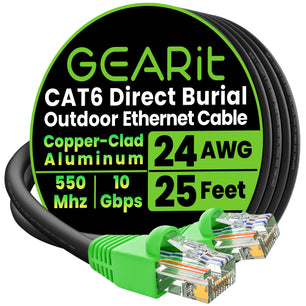
- Outdoor/direct‑burial: Use a weather‑resistant, UV‑stable jacket and consider shielding for EMI. For outbuildings and cameras, a rugged option like the Cat6 Outdoor Direct‑Burial Cable (23AWG, shielded) resists moisture and sunlight. For routing choices and protection, see Weather, Water, and Conduit: Best Practices for Outdoor Installs and Outdoor Ethernet: Direct‑Burial vs UV‑Resistant Jackets and When to Use Each.
- Plenum/risers: In commercial or multi‑story installs, choose jacket ratings aligned with local code. If you’re pushing cable length limits, skim Patch Cable Length Limits and When You Need a Booster or Longer Run Strategy.
Quick Diagnostics Checklist
- 1. Swap with a known‑good Cat6 patch.
- 2. Cable tester: 1→1 through 8→8; no split pairs.
- 3. Try another port/jack; re‑seat until the latch clicks.
- 4. Auto‑Negotiation on both ends; avoid forced mismatches.
- 5. Separate data from power; don’t coil excess cable.
- 6. Validate PoE load and cable quality on powered links.
Decision Matrix: Which Test Finds What?
Use this compact table to pick the fastest test for your symptom.
| Test | Primary Purpose | Finds | When to Use |
|---|---|---|---|
| Swap with known‑good patch | Eliminate patch/jack variables | Bad patch, loose latch, marginal termination | Immediate triage on any symptom |
| Basic cable mapper | Verify wiring and continuity | Opens, shorts, split pairs, mis‑pin | No link light or frequent flaps |
| NIC/switch status | Check negotiated rate and errors | 10/100 fallback, duplex mismatch, CRCs | Throughput slower than expected |
| PoE load check | Validate power budget and drop | Brownouts/reboots, won’t power | Cameras, APs, phones reset under load |
When to Repair vs. Replace
- Repair: One bad termination, minor kink near the plug, or isolated pin failure—re‑crimp and retest.
- Replace: Multiple faults along the run, water ingress, crushed sections, or recurring PoE‑under‑load errors—install a fresh, quality patch or a new pre‑terminated run. For budget‑friendly gigabit where runs are short and power is light, a Cat5e snagless patch can still be a practical fit.
Recommended, Low‑Pressure Upgrades
- Keep spares: Stock a few lengths so you can isolate faults quickly. A compact bundle like the Cat6 Ethernet Patch Cable 10‑Pack covers common desk and IoT distances without overbuying.
- Right cable for the job: For a clear, at‑a‑glance selection framework, see Ethernet & Networking Buying Basics: Choose the Right Cable by Speed, Environment, and Termination.
- Outdoor runs: If you’re connecting sheds, cameras, or a garage office, plan materials and routing with Weather, Water, and Conduit: Best Practices for Outdoor Installs.
Frequently Asked Questions
How do I tell if the issue is the cable or the port?
Do a swap test: move the same patch to a different port, then try a known‑good patch in the original port. If the problem follows the cable, replace it. If it stays with the port, re‑terminate or replace that jack/switch port.
Can Cat5e handle Gigabit and PoE for home use?
Yes—Cat5e commonly supports 1 GbE and typical PoE loads on short, clean runs. For more headroom, especially with multi‑gig or higher PoE classes, step up to Cat6 pre‑terminated patches.
Should I use shielded cable at home?
Most U.S. homes are fine with unshielded Cat5e/Cat6 when you keep data runs separated from power and avoid long coils. If you must run parallel to noisy sources, review Shielded vs Unshielded (S/FTP vs UTP): How to Reduce Interference at Home.
How long can an Ethernet patch be before I need a different strategy?
For structured runs, the channel spec is typically 100 meters including patching. For edge cases and longer device leads, see Patch Cable Length Limits and When You Need a Booster or Longer Run Strategy for practical limits and alternatives.
Next Steps
If you’ve identified a weak link, replace that segment with a pre‑terminated, pure‑copper patch that matches your speed and environment. For speed planning and clean upgrades, compare Cat6 vs Cat6a vs Cat8, and for gaming‑focused setups explore Gaming Over Ethernet: Low‑Latency Setup Without Overbuying. For any outdoor segment, consider the Cat6 Outdoor Direct‑Burial Cable paired with the routing tips above.


