

If your wired connection hiccups near power strips, LED lighting, or a home theater stack, you’re probably choosing between shielded (S/FTP or FTP) and unshielded (UTP) Ethernet. For most U.S. homes, UTP patch cables are excellent for short, tidy indoor runs. Shielding earns its keep when cables must sit close to AC power, weave through crowded AV racks, or head outdoors to PoE cameras. Use the quick picks, comparison table, and scenarios below to match the cable to your space without overspending.
Quick answer: Which should you buy?
- Choose UTP indoors for everyday patching between modem, router, switches, PCs, game consoles, and TVs—especially when you can keep some spacing from AC cords. A reliable default is a Cat6 UTP patch cable.
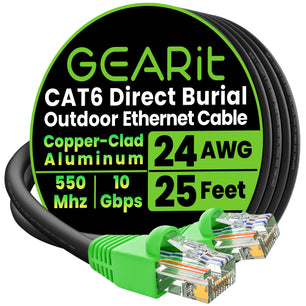
- Choose shielded (S/FTP or FTP) when the run hugs power cables, passes behind dense AV gear, lives in older homes with noisier wiring, or goes outdoors to PoE cameras. For long outside drops, an outdoor‑rated, shielded link like Cat6 Outdoor Shielded Direct‑Burial Cable is a strong fit.
- Speed comes from category (Cat5e/6/6a/7/8), not from shielding. If you’re aiming for 1–10 GbE, compare categories in Cat6 vs Cat6a vs Cat8: Pick the Right Cable for 1G, 2.5G, 5G, and 10G.
Why interference happens at home
Electromagnetic interference (EMI) and radio‑frequency interference (RFI) can couple into Ethernet cabling from AC lines, switching adapters, dimmers, LED drivers, big amplifiers, and motors (HVAC blowers, garage openers). Twisted pairs cancel a lot of noise, but long parallel runs next to power or crowded equipment clusters can still cause link drops, renegotiation to slower speeds, or random reboots on PoE devices.
S/FTP vs UTP explained
- UTP (Unshielded Twisted Pair): Four twisted pairs with no metal shielding. Flexible, easy to route/terminate, and ideal for clean indoor spaces.
- FTP or STP (overall shield): A foil or braid around all pairs that helps blunt external noise; slightly stiffer and benefits from shield‑rated connectors.
- S/FTP (overall braid + foil on each pair): Highest noise rejection and useful in very noisy spots and outdoor camera runs where EMI and weather both matter.
Grounding tip: Shielded solutions work best when the shield continues through shielded connectors/jacks to an appropriate ground path on your equipment. If you won’t use shielded connectors or aren’t sure about grounding, UTP is usually the safer indoor choice. For quick diagnostics after install, see Troubleshooting Guide: Common Ethernet Failures and How to Test.
Side‑by‑side comparison
Match shielding style to your priorities with this quick matrix.
| Option | Noise immunity | Flexibility | Install complexity | Typical home use |
|---|---|---|---|---|
| UTP | Good (twist only) | High (most flexible) | Low | Indoor patching, desks, tidy racks |
| FTP/STP | Better (overall shield) | Medium | Medium (shielded terminations recommended) | Runs near power or AV gear; moderate EMI |
| S/FTP | Best (overall + pair foil) | Lower (thicker) | Higher (continuous shield path) | Outdoor/PoE cameras; high‑EMI spaces |
Real‑world picks by scenario
1) Everyday home patching (apartments, home offices)
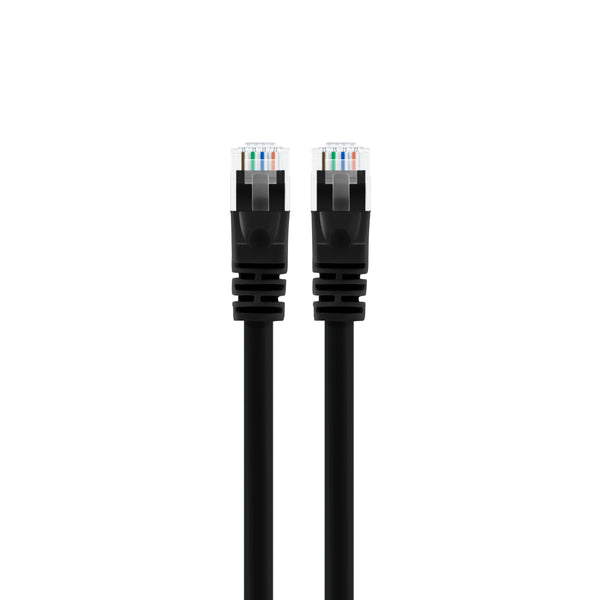
For short, indoor links where cables don’t share a pathway with power cords, a UTP patch is typically all you need. It’s flexible, easy to hide behind furniture, and cost‑effective. If you only need gigabit for legacy gear, a Cat5e UTP patch stays compatible; for fresh builds, Cat6 UTP is a practical baseline. To size the category for your speed goals, start with this category speed guide.
- Why this fits: Minimal EMI indoors and frequent rearranging favor flexible UTP over stiffer shielded cables.
- Good indoor UTP picks: For value patching to routers, TVs, and consoles, see Cat6 Ethernet Patch Cable (UTP) or, for legacy 1 Gbps devices and color‑coding, Cat5e UTP patch (black). Multi‑room setups can benefit from convenient twin packs like the Cat6 UTP Patch Cable (2‑Pack).
- Gaming note: For latency‑sensitive play, a short UTP run to your console or PC is typically the cleanest path. If you’re optimizing a full setup, see Gaming Over Ethernet: Low‑Latency Setup Without Overbuying.
2) Under‑carpet or tight‑clearance runs
Flat cables slide under rugs or baseboards with a low profile. If the path passes near power strips or a crowded AV console, a shielded flat patch can reduce noise while staying slim. For bend‑radius and placement tips, see Flat vs Round Ethernet: Bend Radius, Under‑Carpet Runs, and Trade‑offs.
- Why this fits: Low‑profile routing plus localized EMI near entertainment centers makes a shielded flat cable a sensible compromise.
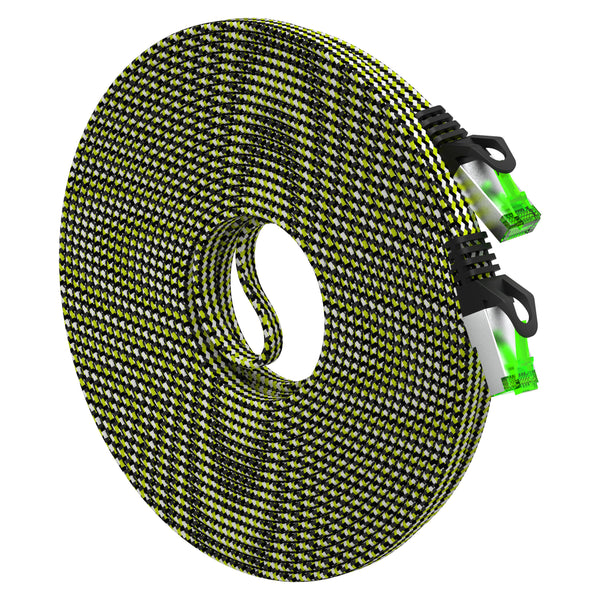
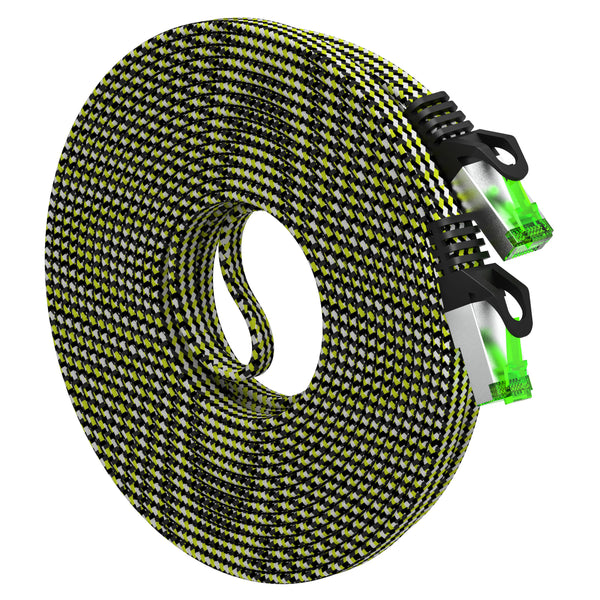
- Try this: A slim S/FTP flat patch like the Cat7 Flat Patch Cable (S/FTP, 25 ft).
3) Outdoor and PoE camera runs
Outdoor cabling faces EMI plus weather, UV, and moisture. Choose an outdoor‑rated jacket and consider shielding if cables share space with power or run along exterior walls. Camera drops to soffits, garages, or gates are strong candidates for a shielded outdoor cable. Plan jackets and routing with Outdoor Ethernet: Direct‑Burial vs UV‑Resistant Jackets and Weather, Water, and Conduit: Best Practices for Outdoor Installs. If devices are PoE‑powered, confirm budgets and distance using PoE and PoE+: Cable Gauge and Distance Planning for Cameras and APs.
- Long outdoor or conduit runs: A shielded, outdoor‑rated pre‑terminated cable with a UV‑resistant jacket—such as the Cat6 Outdoor Shielded Direct‑Burial Cable—is built for in‑ground or exposed segments and works well for PoE cameras or access points.
- Short outdoor patch leads: Between a junction box and camera housing, use a pre‑terminated shielded patch like the Cat7 Outdoor Patch Cable (S/FTP, waterproof) for weather resistance and robust shielding.
Install practices that reduce interference without overbuying
- Route smart: Avoid long, parallel runs next to AC power cords, surge protectors, and dimmers. If you can’t avoid a crossing, do it at a right angle and keep practical separation.
- Keep connectors consistent: Shielded cable works best with shielded plugs/jacks so the shield continues through to ground. Mixing shielded cable with unshielded connectors limits the benefit.
- Ground deliberately: Aim for a single, appropriate ground path per your device manuals. If grounding isn’t practical, pick UTP for indoor segments.
- Respect bend radius: Avoid creases that increase crosstalk and reflections. For tight spaces and furniture passes, review Flat vs Round Ethernet.
- Mind segment length: Keep patch segments reasonable and check your total channel length; for planning beyond a single room, see Patch Cable Length Limits and When You Need a Booster or Longer Run Strategy.
- Test and verify: After installation, confirm negotiated speed and stability. If issues persist, walk through the steps in Troubleshooting: Common Ethernet Failures and How to Test.
- Pre‑made vs bulk: Pre‑terminated patch leads are quick and reliable for short runs. If you’re weighing tool costs for custom terminations, skim Bulk Cable vs Pre‑Made Patch: Termination Tools and Cost Worksheet.
Checklist: When S/FTP is worth it vs when UTP is fine
Choose S/FTP or FTP if:
- The run shares a pathway with AC power or sits behind a dense AV stack with multiple switching power supplies.
- You’re wiring outdoor devices (e.g., PoE cameras) where weather and EMI both matter. A shielded, outdoor‑rated option like a direct‑burial Cat6 cable handles UV and moisture exposure.
- You’ve seen link drops that improve when you temporarily reroute a patch away from power or LED dimmers.
Choose UTP if:
- It’s a short indoor patch with reasonable spacing from power cords and adapters.
- You value flexibility for frequent rearranging of desks or racks, or you’re unsure about using shielded connectors.
- You’re building a clean, in‑room patching setup and want simple, low‑cost cabling. Multi‑room setups can benefit from convenient twin packs like the Cat6 UTP Patch Cable (2‑Pack).
Frequently Asked Questions
Will shielded Ethernet make my internet faster?
Not directly. Speed comes from the cable category and your network gear. Shielding mainly prevents noise from forcing slower link rates. For matching cable category to your service and equipment, see this category guide.
Do I need to ground shielded cable at home?
For shielded runs, use shield‑rated connectors so the shield terminates properly to equipment that provides a suitable ground path. If you can’t guarantee that path, unshielded UTP indoors is usually the safer choice.
What should I use for a backyard or garage camera?
For long outdoor drops, use a shielded, outdoor‑rated pre‑terminated cable with a UV‑resistant jacket, such as the Cat6 Outdoor Shielded Direct‑Burial Cable. For the final short segment from a junction box to the camera, a weather‑sealed shielded patch like the Cat7 Outdoor Patch Cable is convenient. If a device still reboots or loses power, review PoE distance and watt budget planning.
Flat or round cable under a rug?
Flat cables are easier to hide, but mind bend radius and nearby power strips. If the path is in a noisy AV area, a shielded flat cable such as the Cat7 Flat Patch Cable (25 ft) balances low profile with added noise rejection. For placement and safety tips, see Flat vs Round Ethernet.
Next steps
If you’re wiring a single room, start with UTP for short, tidy links and upgrade to shielded patches in the few spots where power and data have to sit close. For backyard cameras or outbuildings, pick an outdoor‑rated shielded cable and review outdoor best practices. And if a link still acts up after install, walk through Troubleshooting: Common Ethernet Failures and How to Test to isolate the culprit fast.