

A modern fifth-wheel or Class A coach can carry more than $10,000 in electronics, from dual air-conditioning compressors and convection microwaves to smart TVs, lithium inverters, and satellite routers. Plugging that rolling investment into an unknown campground pedestal without protection is a gamble that can end in fried circuit boards and a ruined road trip. Choosing the best 50 amp RV surge protector keeps every circuit stable, shields delicate components from sudden voltage swings, and lets you explore with total peace of mind.
Why a Dedicated 50-Amp Surge Protector Matters
Voltage at campgrounds is notoriously unpredictable, especially during peak season when every site is drawing heavy current. Even well-maintained parks can experience brownouts, reverse polarity, or loose neutrals that silently erode appliance lifespans until the next big spike finishes them off. A mission-ready surge protector stands guard 24 ⁄ 7, cutting power in milliseconds before electricity misbehaves.
Electrical Grid Inconsistencies
Utility feeds in rural RV parks often snake for miles over aging conductors, where lightning, wind, and inquisitive wildlife create unpredictable power surges and voltage sags. A campground power pedestal that shows 120 V at check-in can droop to 105 V once every A/C unit spins up, slowly roasting compressor windings and motherboard capacitors and spawning costly electrical issues far from town. Savvy travelers slip an inline surge protection device into the shore power cord, letting real-time monitors in progressive industries flag danger before it harms the coach’s delicate electrical system.
Brownouts are only half the story; miswired generators can back-feed 150 V into unsuspecting rigs. A quality Surge Guard or similar unit samples both hot legs a thousand times per second, disconnects the moment thresholds are breached, and only restores power after conditions normalize—an essential layer of proactive electrical management that shields everything from water-heater control boards to CPAP machines.
High-Value Electronics at Stake
Today’s RVs pack more tech than many sticks-and-bricks homes. Residential refrigerators with inverter compressors draw sensitive startup currents, LED lighting controllers expect stable 12-volt rails, and lithium battery management systems shut down when shore power misbehaves. One catastrophic surge can destroy all three in a blink.
A properly sized 50-amp device not only clamps spikes but absorbs them; its internal MOVs and thermal fuses sacrifice themselves to keep electronics alive. 4100-joule models safely divert transient energy hundreds of times before degradation, outlasting bargain units that tap out after a single hit.
Weather and Campground Hazards
Rain-soaked pedestals, sun-baked jackets, and rodent-nibbled neutrals can turn routine campground wiring into a ticking hazard for everyday RV life. One stray voltage spike or a loosened lug inside the pedestal’s circuit breaker box can back-feed stray current through your rig, lighting up the main breaker panel and anything plugged into a bedside power strip. A surge protector tied to an onboard electrical management system watches both hot legs in real time and disconnects power the instant thresholds slip outside the safe zone.
Premium units back that vigilance with weather-sealed lids, tamper-resistant clasps, and a steel cable lock that deters walk-offs in crowded parks. Solid-state relays provide millisecond auto-shutoff after a fault, then restore power only after voltage stabilizes, saving MOVs and extending service life so you replace surge modules, not whole housings.
Key Specifications to Evaluate
Understanding the numbers behind the marketing ensures you invest in real protection, not false security.
Joule Rating & Clamping Voltage
A joule rating tells you how much energy a surge protector can soak up before it sacrifices itself. Higher numbers mean your rig can shrug off repeated voltage fluctuations and even nearby lightning strikes, sparing appliances from costly electrical damage. For a 50-amp RV, 4,100 joules that clamp at 1,200 V-pk keep inverter-chargers and A/C control boards safe, while bargain 2,000-joule units that don’t kick in until 1,800 V leave capacitor legs exposed to failure.
Protection isn’t just about joules; day-to-day resilience matters, too. Look for UL-1449 certification plus smart modules that stream real-time data over Bluetooth connectivity, so you can verify pedestal health without stepping into the rain. Housings rated IP65 water-resistant combine gasketed lids and UV-stabilized plastics for lasting weather resistance, ensuring the MOV network inside keeps working season after season, no matter where the road, or the storm, takes you.
Response Time & Diagnostics
Fast reaction offsets are critical: 1 ns response time means the MOV network diverts energy before sine-wave peaks spike. LED status bars or LCDs that display real-time voltage help you spot sagging campground feeds before they roast compressor motors.
Advanced units include smart BLE or Wi-Fi modules that forward alerts to your phone, so you know when a pedestal tripped while you were hiking. Over-current protection (OCP) with manual reset buttons keeps nuisance trips from turning into helpless blackouts.
Build Quality & Weatherproofing
Outdoor power gear lives in the splash zone of mud-spattered tires and lawn sprinklers. NEMA 3R housings with gasketed lids keep spray out, while internal epoxy potting guards against condensation freeze-thaw cycles. Heavy-gauge pigtail leads with molded grips survive hundreds of plug-ins without conductor breakage.
Oversized brass blades dissipate heat better than nickel-plated steel, preventing thermal creep that loosens contact pressure. Large ergonomic handles make disconnection easier when temperatures plunge and vinyl turns stiff.
Connectivity and Smart Monitoring
The latest protectors pair with Android and iOS apps, delivering voltage, current, frequency, and kilowatt-hour stats on demand. Cloud logging helps identify chronic campground issues or faulty onboard appliances that draw uneven current across legs.
Smart guardians can even alert you if someone unplugs the shore cord or if a neighbor accidentally connects to your pedestal, saving you from late-night fridge shutdowns and battery drain.
Installation & Maintenance Best Practices
A top-shelf protector only works when installed correctly and inspected regularly.
Proper Pedestal Testing
Before you ever plug in, use a polarity tester or the protector’s integrated analyzer to verify the pedestal. Detecting reverse polarity or open neutrals in advance prevents energizing the coach frame and shocking unsuspecting pets.
Always shut pedestal breakers off before connecting. Energize once everything is secure; the surge unit’s delay timer will verify voltage and frequency during a 15- to 90-second window, then pass power automatically.
Cable Management and Locking
Ratchet-style cord locks or stout padlocks deter theft. Loop excess cable in broad coils to maintain the minimum bend radius and to prevent conductor work-hardening.
Keep the device off wet soil with a short scrap of lumber or mounting bracket; standing water wicks up vinyl sheathing and corrodes prongs over time. Monthly cleaning with dielectric grease preserves contact resistance for low-heat operation.
Routine Health Checks
MOVs don’t last forever. LED fault indicators or companion apps warn you when absorption capacity drops below safe levels. Replace modules every three to five years—or sooner if you frequent lightning-prone regions.
Inspect pigtail insulation for nicks where compartment doors pinch the cord. Small cuts expose copper to moisture and create resistive hot spots that melt plug heads during the July heat.
GEARit 50-Amp Surge Protectors in Focus
GEARit engineers its lineup to exceed UL 1449 and NEC 551 RV standards, providing robust protection for rigs up to 12,000 W.
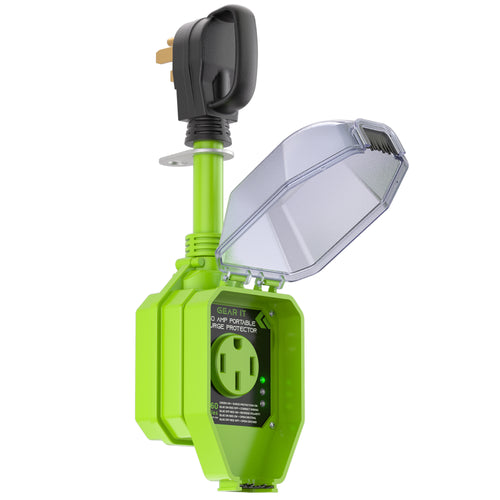
GEARit 50 Amp Surge Protector Plug with Weatherproof Cover

This handheld workhorse offers 4,100 joules of line defense and clamps spikes at 1,200 V. A clear polycarbonate lid shields indicator LEDs from dust and drizzle while letting you verify status at a glance. The molded TT-30P plug features oversized pull handles so disconnects never strain your wrists after a long travel day.
Dual-leg monitoring displays voltage on both 120 V legs simultaneously, catching split-phase imbalances that cheaper single-LED testers miss. A 90-second “RV-Safe” delay lets air-conditioner compressors bleed down before re-energizing, protecting hard-start capacitors from double hits.
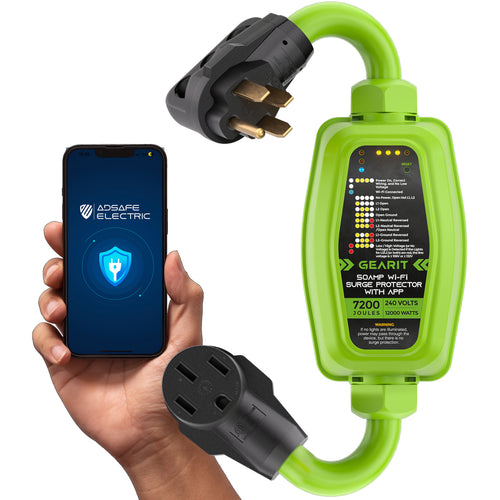
GEARit 50 Amp WiFi RV Surge Protector Monitor

Perfect for tech-savvy travelers, this model pairs with the GEARit Guardian app to stream real-time voltage, current draw, and kilowatt-hours to your phone, even when you’re off hiking a trail. A built-in alarm pushes notifications if voltage drops below 105 V or spikes above 132 V, so you can shut loads down before damage occurs.
The weather-sealed ABS enclosure meets NEMA IP65 ratings, while replaceable MOV cartridges extend service life indefinitely. Firmware updates add new pedestal-diagnostic modes, keeping the unit current as electrical codes evolve.
GEARit 50 Amp Circuit Analyzer Voltage Protector
This rugged analyzer combines a 4,100-joule surge bank with a full LED pedestal tester in one portable brick. Eight diagnostic lights decode seven wiring faults such as open neutral, open ground, reverse polarity, and more, before a single watt reaches your RV.
An integrated 50-amp pass-through extension plug lets you add cable length without extra adapters, ideal when pedestals sit awkwardly behind shrubs or fences. Thermal sensors shut the device down if ambient temperatures soar above 221 °F, preventing meltdown under blazing desert sun.
People Also Ask
Can I use a 30-amp surge protector on a 50-amp rig?
A 30-amp unit will physically plug in with adapters, but it can only handle one hot leg. You’ll leave half the coach unprotected and exceed the device’s joule rating under heavy load, voiding warranties and risking damage.
How long do MOV surge modules last?
Life depends on the surge count and size. Light use might see ten years; frequent lightning regions can exhaust absorbers in three. GEARit indicators alert you when a replacement is due.
Will a surge protector fix low campground voltage?
Units with low-voltage cutoff prevent brownout damage but do not boost voltage. If the pedestal regularly drops under 108 V, consider an autoformer to raise the voltage back into spec.
Defend Your Rolling Home—Equip GEARit Protection
Your RV is more than transportation; it’s a mobile sanctuary packed with irreplaceable memories and costly electronics. Safeguard it with the best 50-amp RV surge protector and drive away from pedestal roulette forever.
Shop GEARit 50 Amp Surge Protectors—founded in 2006 by California-based connectivity enthusiasts pairing innovative accessories with friendly, knowledgeable support—and enjoy every campground knowing your rig is powered, protected, and ready for adventure.