

Skipping cable quality when you’ve splurged on a 4K 120 Hz OLED TV or a next‑gen console is like fueling a sports car with watered‑down gas. Those raw specs need an unthrottled pipeline, or they devolve into stutter and handshake pop‑ups. A well‑matched lead assures the expensive silicon inside your TV and console actually flexes its full potential.
Choosing the best HDMI 2.1 cable ensures that every frame, HDR tone, and Dolby Atmos channel sails from source to screen intact. This guide unpacks how HDMI 2.1’s 48 Gbps pipeline changes gaming and cinema, explains key specs that separate budget cords from pro‑grade links, and spotlights four GEARit options engineered for flawless, future‑proof performance.
Why HDMI 2.1 Matters in 2025
The jump from HDMI 2.0’s 18 Gbps to high-speed HDMI cable version 2.1’s 48 Gbps transforms living‑room tech. That added bandwidth unlocks uncompressed 4K 120 Hz, 8K 60 Hz, and even 10K workflows for cutting‑edge signage. Variable Refresh Rate kills screen‑tearing, Auto Low‑Latency Mode slashes input lag, and eARC funnels lossless Dolby Atmos back to receivers without optical cables. These perks depend on pristine signal integrity—one weak link turns flagship specs into flicker and silence.
Effective shielding and precise impedance control ensure the TMDS clock lane remains jitter-free, allowing HDR tone mapping to stay smooth during scene transitions. Cut corners on quality, and you risk handshake failures, black-screen interruptions, and audio sync issues
Key Specs That Define a Premium Cable
Every marketing box boasts “Ultra High Speed,” but only a few pass the HDMI Forum’s eye‑pattern test with room to spare. Certified cables carry a hologram sticker plus a QR code linking to official results. Skipping that verification risks a silent downgrade to 4K 60 Hz the moment firmware tightens tolerances.
Bandwidth & Signal Integrity
Ultra High‑Speed certification means verified performance at 48 Gbps. A wider eye diagram translates to fewer bit errors, sharper HDR gradients, and smooth VRR at 120 Hz. Cables that barely pass may work today but fail when firmware updates push higher frame rates.
Three‑layer shielding, tight twist lay, and lower dielectric loss collectively widen that margin. Extra electromagnetic headroom keeps 12‑bit HDR gradients artifact‑free even when other devices share the conduit. It also buys stability for future HDMI 2.1a features that may squeeze signaling budget further. With extra headroom, you’ll stream 8K YouTube in VP9, play 4:4:4 PC output, and still have bandwidth to spare for future HDMI 2.1a features.
Conductor Material & Gauge
Pure 30 AWG copper inside GEARit’s ultra high speed HDMI cable keeps attenuation low on six‑foot runs, feeding 48 Gbps to an Xbox Series X without dropped 4K 120Hz frames or Dolby Vision tone‑mapping errors. Stepping up to thicker 28‑ or 24‑AWG conductors cuts resistance even further, giving installers margin for longer pulls and tighter bends while maintaining pristine HDR gradients.
Cheap HDMI cables that rely on copper‑clad aluminum (CCA) shave pennies upfront but sap bandwidth reserves, especially once tucked behind walls or near power bricks. Elevated resistance in CCA leads to hotter jackets, higher bit‑error rates, and handshake loops that surface just as your receiver negotiates Dolby Atmos. Cable matters—look for "bare copper" on the spec sheet and a certified QR hologram before trusting any run to drive premium networked displays.
Connector Engineering
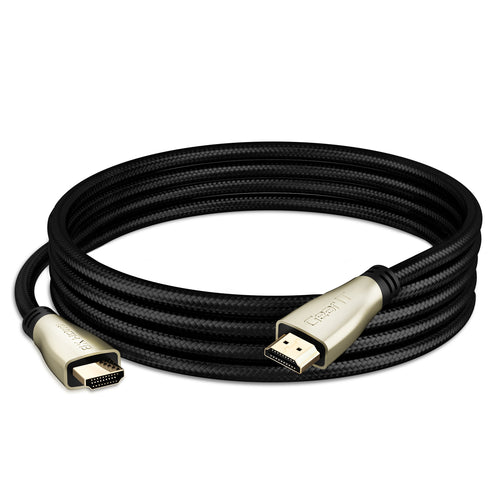
Precision‑machined shells keep mating force consistent, ensuring that GEARit’s brand name stamp isn’t just cosmetic. Gold‑plated contacts fend off oxidation while the internal pin layout follows the latest HDMI LA certification program guidelines, so an Apple TV 4K or next‑gen gaming monitor negotiates 4K 120Hz instantly. Optional swivel angle connectors solve tight‑clearance installs behind wall‑mounted displays without crushing ultra-certified cable jackets, maintaining full 4K HDMI cables' capability and throughput for 8K resolutions and Dolby Vision tone mapping.
Heat‑resistant metal shells are vital for AVR racks where ambient temps hit 110 °F. Polymer creep under load can loosen grip and break HDCP in your gaming TV or Nintendo Switch 2 experience; GEARit’s alloy housings avoid that thermal fatigue altogether. Whether paired with a short copper jumper or a thirty‑foot fiber optic HDMI cable, the connector’s EMI shielding prevents handshake drops when vacuums roar or network switches cycle nearby, eliminating the intermittent cut‑outs in your 4k UHD viewing experience.
Comparing Cable Constructions
Each installation scenario favors a different build; understanding options prevents overspend or underperformance.
Passive Copper (≤10 ft)
Short desktop or console runs thrive on passive copper. Low capacitance preserves phase coherence, keeping latency microscopic for competitive shooters. Flat‑jacket designs slip under rugs, while round PVC with ATC certification remains flexible in tight media‑cabinet bends.
Choose passives if your rack sits within ten feet of the display and you value plug‑and‑play simplicity. They draw no power and work with legacy splitters. The affordability of these copper-based 4K TV fiber cables means you can keep a spare in the drawer for on‑the‑fly troubleshooting. The GEARit Premium Braided 8K HDMI 2.1 (6 ft) excels here, combining nylon abrasion resistance with dual‑layer foil for EMI suppression.
Hybrid Fiber‑Optic (10–50 ft)
When projectors hang thirty feet away, copper hits its attenuation ceiling. Hybrid AOCs convert TMDS lanes to laser light, cruise along glass fibers, then reconvert at the display.
GEARit’s 30‑ft Fiber‑Optic HDMI 2.1 cable weighs a quarter of comparable copper and routes through ¾‑inch conduit without fishing nightmares. Immunity to EMI keeps projectors free of snow when lights dim. Its glass cores handle tight bends far better than earlier plastic‑optic AOCs. Direction‑marked shells ensure an error‑free installation. Integrated strain‑relief boots protect delicate transceivers during pull. A Kevlar ripcord adds tensile strength for safe snag recovery.
Full Fiber (50 ft +)
Large venues or VR arenas leapfrog copper entirely. Fiber’s immunity to ground loops and surge spikes protects mission‑critical LED walls during thunderstorms. The tiny 3 mm jacket lets installers pack dozens of feeds into already crowded trays. All‑fiber runs shrug off HVAC magnetic fields and weigh next to nothing, easing overhead rigging.
Laser modules pull 5 V from the HDMI pin; check that legacy splitters supply enough current. Full fiber costs more upfront, but prevents repeater chains and latency‑inducing extenders. Zero‑latency links are crucial for simulcast esports events. Fiber also sidesteps the 15‑ft ceiling that plagues passive copper when pushing 8K 60 Hz.
Installation & Troubleshooting Tips
Even pro‑grade cables fail if bent like spaghetti or routed near power transformers.
Respect Bend Radius
Never curl tighter than five times the diameter. If a bend feels forced, reroute rather than risking micro‑cracks in the dielectric. Service slack should form gentle loops, not figure‑eights. Sharp bends detune impedance and spawn reflections that corrupt high‑frequency lanes. Use 90‑degree stubs instead of forcing U‑turns behind wall mounts.
Label directionality on AOCs and flip if the display shows “No Signal.” Keep a portable tester handy to confirm continuity before buttoning up wall plates. A quick polarity check now saves drywall patches later. Misorientation is the most common installation mistake.
Route Away From Power
Cross AC lines at right angles and keep a six‑inch separation in parallel runs. Metal conduit acts as a Faraday cage when sharing shafts with Romex. Where spacing is impossible, select ferrite‑bead equipped cables for added suppression. Prevention beats ferrite‑core cure, though snap‑on chokes can rescue legacy installs.
Snug cable ties hold bundles to rack rails, but avoid over‑tightening ,which crushes dielectric foam and raises insertion loss. Velcro ties allow quick re‑routing without nicking jackets. Color‑code ties by destination to streamline future mapping.
Validate With Built‑In Tools
Modern TVs and GPUs include HDMI diagnostic modes. These built‑in scopes display bit error rates and FRL lane status in real time. Run them post‑install for a baseline before firmware churns. Run them post‑install to verify eye pattern margin and HDCP handshakes before movie night.
If 4K 120 Hz fails, drop to 4K 60 Hz; if stability returns, the cable lacks bandwidth headroom—upgrade before firmware pushes higher frame rates.
Featured GEARit HDMI 2.1 Cables
GEARit’s lineup covers every scenario, from couch gaming to ceiling projectors. Each cable below meets Ultra High‑Speed spec and ships with QR‑code certification.
GEARit 8K HDMI 2.1 Fiber‑Optic Cable (100 ft)

This hybrid AOC marries copper power lines with glass fibers to maintain 48 Gbps across basement‑to‑loft spans. The slim 4.8 mm jacket feeds through conduit with ease and supports eARC for lossless Dolby Atmos return.
Exterior Kevlar strands boost pull strength during long feeds, and direction‑marked shells prevent rookie install errors.
GEARit Premium Braided 8K HDMI 2.1 Cable (7 ft)

A nylon braid rated for 15,000 flex cycles resists desk‑side abrasion and pet chews. Dual‑layer shielding damps Wi‑Fi‑6 router bursts, preserving HDR tone maps on ultra‑wide monitors. Gold‑plated contacts safeguard the port grip after countless console swaps.
GEARit Ultra‑High‑Speed 8K HDMI 2.1 Cable (10 ft)
Pure‑copper 30‑AWG conductors certify at 48 Gbps without active components. The PVC jacket stays flexible down to −4°F, handy for garage gaming rigs. Precision‑machined shells grip tightly, preventing accidental disconnects when kids jostle equipment mid‑match.
GEARit 8K Premium Braided HDMI 2.1 Cable (10 ft)
Need stealth behind articulating wall mounts? This braid‑clad line bends to 45 degrees without impedance spikes and features anti‑slip grips for tool‑free swaps.
Internal Mylar wraps thwart RF chatter from adjacent power bricks, keeping CEC commands responsive for all‑in‑one remotes.
Future‑Proof Your Media Stack
HDMI 2.1a firmware promises Source‑Based Tone Mapping and other refinements. Spec updates often boost clock rates, so buying headroom today avoids rip‑and‑replace tasks tomorrow. Early adoption also means smoother resale if you upgrade screens regularly. A cable that nails 48 Gbps today stands ready for tomorrow’s innovations.
Level‑Up Every Frame—Shop GEARit HDMI 2.1 Cables
A flawless viewing experience hinges on the slender conduit carrying those bits. A copper or fiber run may be invisible behind drywall, but it dictates every pixel and decibel you enjoy. Treat the cable as seriously as any screen or GPU upgrade. Equip your setup with the best HDMI 2.1 cable and watch your 4K 120 Hz gameplay, Dolby Atmos soundtracks, and HDR cinema shine.
Shop HDMI 2.1 Cables at GEARit—founded in 2006 by California‑based connectivity enthusiasts committed to pairing innovative accessories with friendly, knowledgeable support—and experience entertainment without compromise.