

 11% off
Pre-Terminated · Gold-Plated Plugs
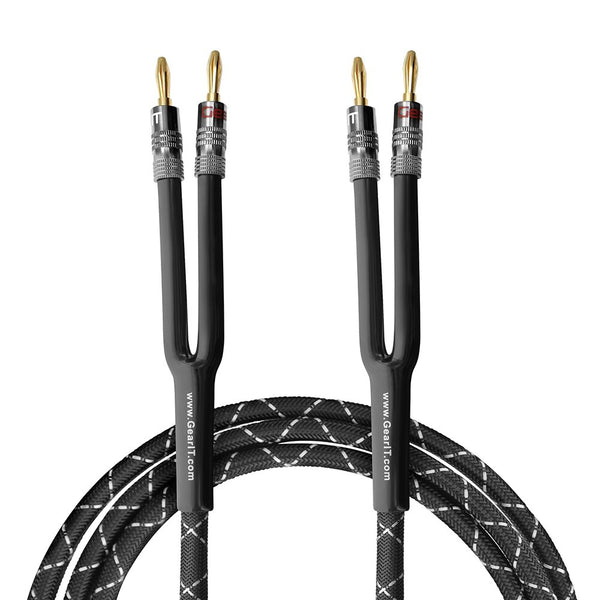
Speaker Cable with Banana Plug
Pre-terminated with 24K gold-plated banana plugs. 10–16 AWG OFC. Ready to plug into any A/V receiver — no stripping, no fraying.
- ★ Lifetime warranty
- ★ Free shipping over $25
- ★ ETL listed · UL standards
Overview
Why banana plugs make a difference
Two-step picker
Two questions decide the right speaker wire.
How long is the run and how much power the amp pushes. Use the picker, then choose the conductor that fits the budget and the room.
1 Pick the gauge
2 Pick the conductor
1
Step 1 · Pick the gauge
Thicker wire = lower resistance = cleaner power.
Every foot of speaker wire adds a tiny amount of resistance between the amp and the driver. The longer the run and the higher the wattage, the thicker the conductor needs to be to keep voltage drop under 5%.
- Short runs (<50 ft): 16 AWG is plenty.
- Most home theaters: 14 AWG sweet spot.
- Long / high-power runs: step up to 12 or 10 AWG.
Interactive · gauge picker
Tell us the run. We'll size the wire.
5 ft
5 ft50100150200+ ft
Amplifier power per channel
Recommended
14 AWG OFC
OFC speaker wire
Short home-theater run — 14 AWG OFC is the sweet spot for 5.1 / 7.1.
Shop 14 AWG OFCTop picks
Speaker Cable with Banana Plug — top picks.
11% off
 10% off
 13% off

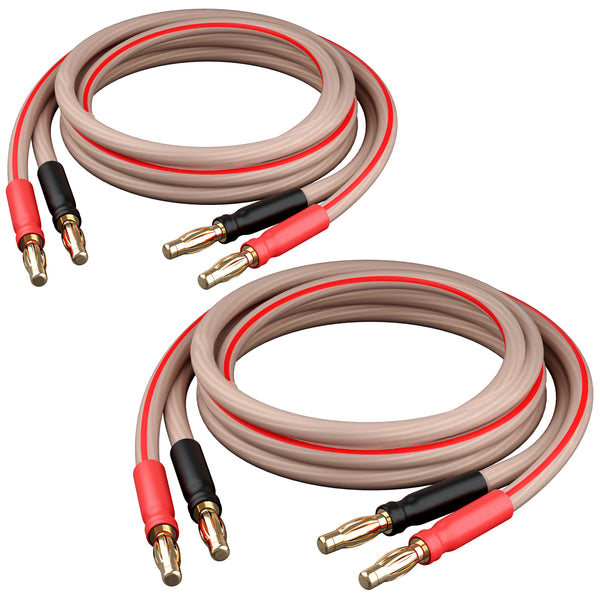 13% off
GEARit
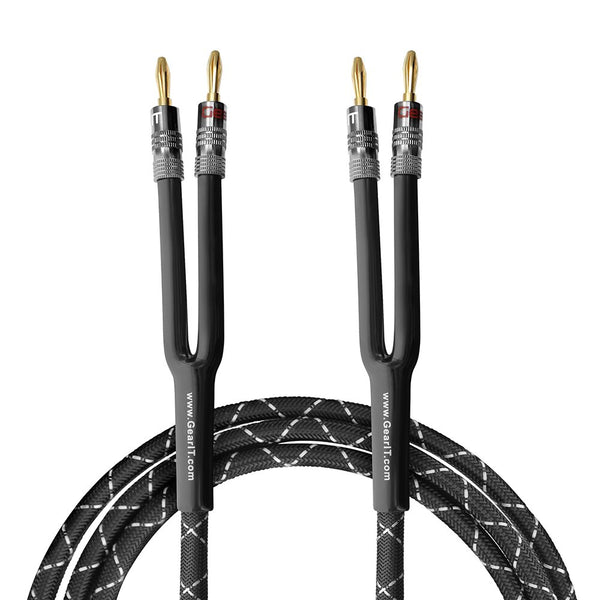
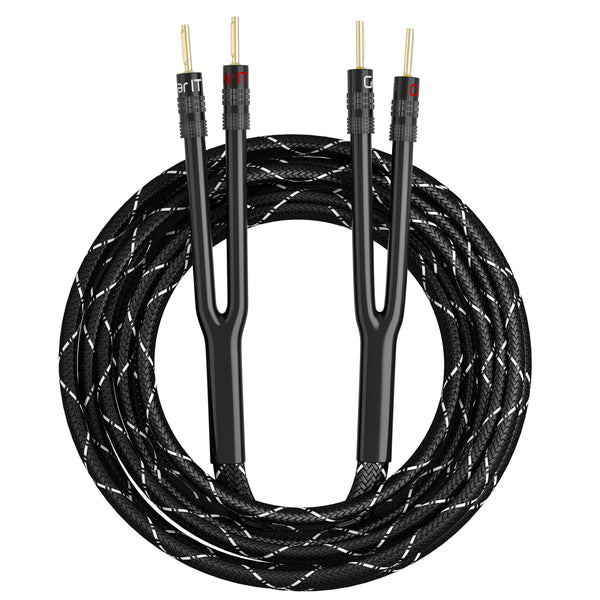
2-Pack 14 AWG Speaker Cable with Banana Plugs Banana Wire for Bi-Wire Bi-Amp HiFi Surround Sound, Clear
4 options
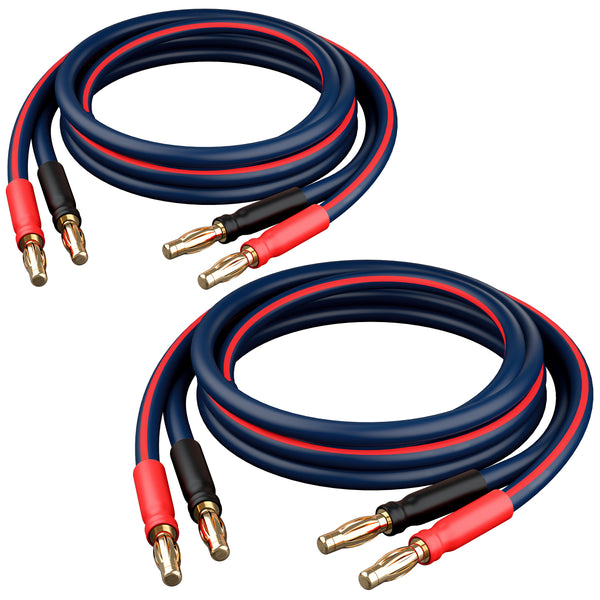 26% offOut of stock
GEARit
2-Pack 14 AWG Speaker Cable with Banana Plugs Banana Wire for Bi-Wire Bi-Amp HiFi Surround Sound, Navy
4 options
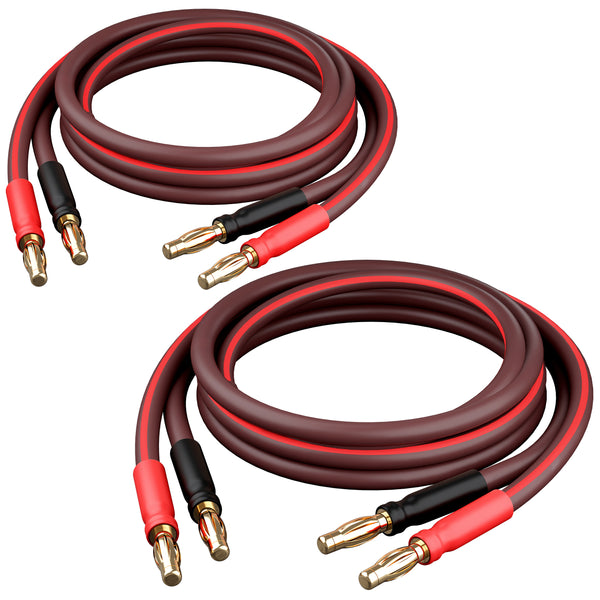 26% offOut of stock
GEARit
2-Pack 14 AWG Speaker Cable with Banana Plugs Banana Wire for Bi-Wire Bi-Amp HiFi Surround Sound, Brown
4 options
FAQ
Questions buyers actually ask.
Will these banana plugs fit my receiver?
Yes. Our banana plugs use the standard 4mm diameter that fits the binding posts on virtually all home theater receivers and speaker terminals from brands like Denon, Yamaha, Marantz, Sony, Onkyo, and others. If your receiver has covered binding posts with a small hole in the back, the plugs insert through there.
What is the advantage of pre-terminated cables over bare wire?
Pre-terminated cables save time and give you a more reliable connection. The factory crimp creates a gas-tight seal between the conductor and the plug that is difficult to replicate with field termination. Bare wire strands can fray, cause shorts against nearby terminals, and degrade over time as they oxidize at the connection point.
Can I use these as bi-amp jumpers between the tweeter and woofer terminals?
Yes. Our shorter lengths, particularly the 3-foot cables, are commonly used as bi-amp jumpers. Make sure your speakers have separate tweeter and woofer binding posts before attempting a bi-amp connection.
How do I tell which end is positive and which is negative?
The cables use a standard color coding. One conductor is marked with a stripe or is a different color to indicate polarity. Connect the marked conductor to the positive terminal on both the receiver and the speaker for correct phase alignment.
What if a plug arrives damaged or comes loose after a few uses?
Contact us at support@gearit.com. Our lifetime warranty covers defects and we will send a replacement.