

 20% offOut of stock
99.9% Pure Copper · Audiophile Grade
OFC Oxygen-Free Copper Speaker Wire
99.9% oxygen-free copper means the lowest resistance and cleanest signal. CL2, CL3, outdoor, and banana-plug builds available.
- ★ Lifetime warranty
- ★ Free shipping over $25
- ★ ETL listed · UL standards
Overview
What makes OFC worth the upgrade
Two-step picker
Two questions decide the right speaker wire.
How long is the run and how much power the amp pushes. Use the picker, then choose the conductor that fits the budget and the room.
1 Pick the gauge
2 Pick the conductor
1
Step 1 · Pick the gauge
Thicker wire = lower resistance = cleaner power.
Every foot of speaker wire adds a tiny amount of resistance between the amp and the driver. The longer the run and the higher the wattage, the thicker the conductor needs to be to keep voltage drop under 5%.
- Short runs (<50 ft): 16 AWG is plenty.
- Most home theaters: 14 AWG sweet spot.
- Long / high-power runs: step up to 12 or 10 AWG.
Interactive · gauge picker
Tell us the run. We'll size the wire.
5 ft
5 ft50100150200+ ft
Amplifier power per channel
Recommended
14 AWG OFC
OFC speaker wire
Short home-theater run — 14 AWG OFC is the sweet spot for 5.1 / 7.1.
Shop 14 AWG OFCTop picks
OFC Oxygen-Free Copper Speaker Wire — top picks.
20% offOut of stock
 26% offOut of stock
GEARit
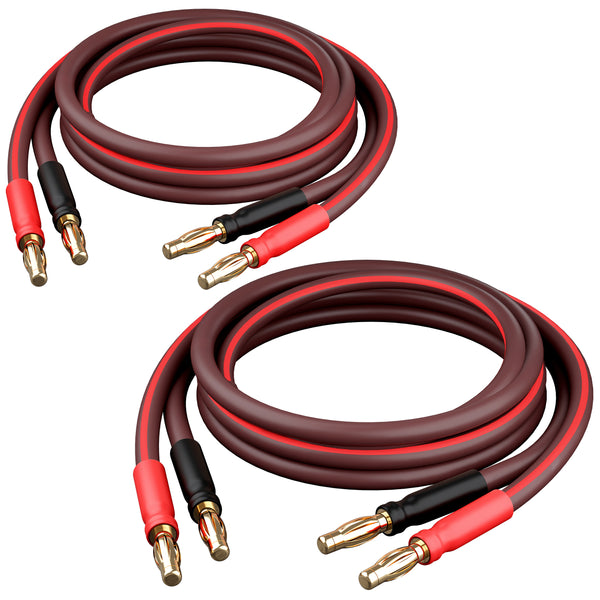
2-Pack 14 AWG Speaker Cable with Banana Plugs Banana Wire for Bi-Wire Bi-Amp HiFi Surround Sound, Brown
4 options
FAQ
Questions buyers actually ask.
What does oxygen-free actually mean for speaker wire?
Standard copper contains trace amounts of dissolved oxygen in its grain structure. Oxygen-free copper is refined to remove that oxygen, resulting in 99.9 percent or higher purity. The practical effect is lower electrical resistance, better conductivity, and less tendency for the copper to oxidize internally over time.
Can I hear the difference between OFC and regular copper?
On short runs with typical home theater receivers, the difference is small. Where OFC becomes clearly audible is on runs over 50 feet, with high-power amplifiers, and in systems with low-impedance speakers. Lower resistance means the amplifier maintains better control over the speaker cone, which shows up as tighter bass and cleaner dynamics.
Is OFC worth the extra cost for a permanent in-wall install?
Yes, for a permanent install it is worth it. The marginal cost over CCA is small compared to the cost of re-pulling cable if you ever upgrade your system. OFC also does not corrode at the terminations the way CCA can over years, so the connection quality stays consistent.
Does OFC speaker wire work with 4-ohm speakers?
Yes, and it is actually the better choice for 4-ohm loads. Lower-impedance speakers draw more current, which makes wire resistance a bigger factor. OFC at the correct gauge keeps that resistance low and gives your amplifier the headroom it needs to drive 4-ohm loads cleanly.
How do I choose between the different OFC products you carry?
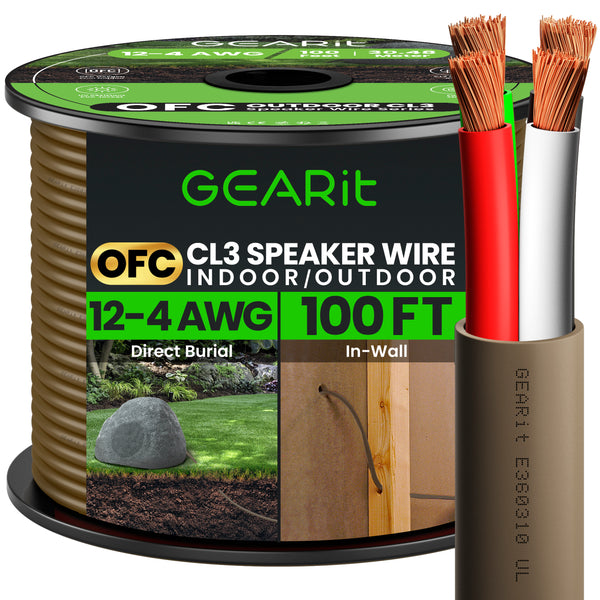
The main variables are gauge, jacket rating, and format. Use the gauge calculator on our speaker wire page to find the right AWG for your run length and amp power. Then choose CL2 for in-wall, CL3 for outdoor or direct burial, and pre-terminated banana plug cables if you want a quick plug-and-play connection. Email support@gearit.com if you want a recommendation for your specific setup.