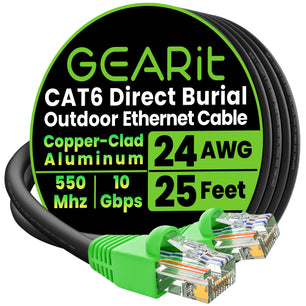


CL3 Rated · Direct Burial
Direct Burial Speaker Wire CL3
OFC conductors, UV-stable jacket, rated for direct burial without conduit. Black and brown available in 100–500 ft spools.
- ★ Lifetime warranty
- ★ Free shipping over $25
- ★ ETL listed · UL standards
Overview
Built to stay underground for decades
Two-step picker
Two questions decide the right speaker wire.
How long is the run and how much power the amp pushes. Use the picker, then choose the conductor that fits the budget and the room.
1 Pick the gauge
2 Pick the conductor
1
Step 1 · Pick the gauge
Thicker wire = lower resistance = cleaner power.
Every foot of speaker wire adds a tiny amount of resistance between the amp and the driver. The longer the run and the higher the wattage, the thicker the conductor needs to be to keep voltage drop under 5%.
- Short runs (<50 ft): 16 AWG is plenty.
- Most home theaters: 14 AWG sweet spot.
- Long / high-power runs: step up to 12 or 10 AWG.
Interactive · gauge picker
Tell us the run. We'll size the wire.
5 ft
5 ft50100150200+ ft
Amplifier power per channel
Recommended
14 AWG OFC
OFC speaker wire
Short home-theater run — 14 AWG OFC is the sweet spot for 5.1 / 7.1.
Shop 14 AWG OFCTop picks
Direct Burial Speaker Wire CL3 — top picks.

GEARit
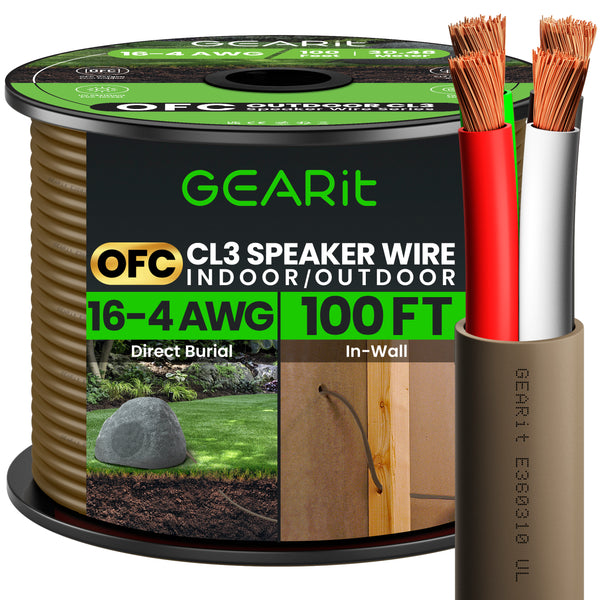
14 AWG Direct Burial Speaker Wire 4-Conductor Bi-Wire Cables - CL3 Rated - Oxygen Free Copper (OFC), Black
2 options
 20% off
 18% off
GEARit
12 AWG Direct Burial Speaker Wire 4-Conductor Bi-Wire Cables - CL3 Rated - Oxygen Free Copper (OFC), Black
2 options
 18% off
GEARit
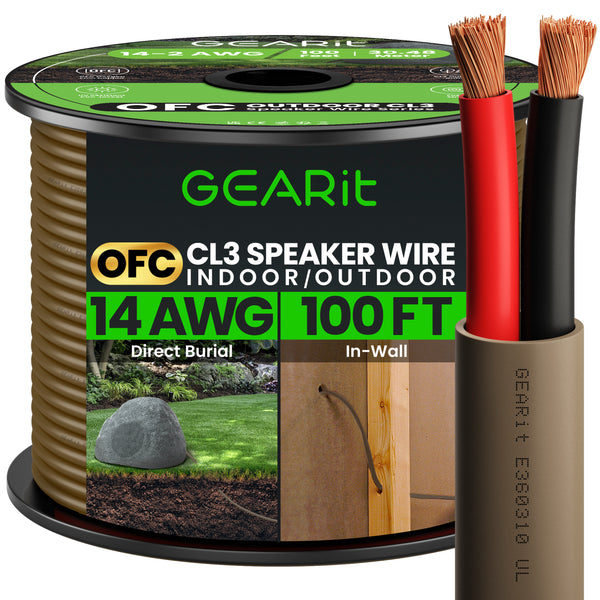
14/2 Outdoor Speaker Wire 14 Gauge CCA - CL3 Rated for Direct Burial in Ground
2 options
 12% off
GEARit
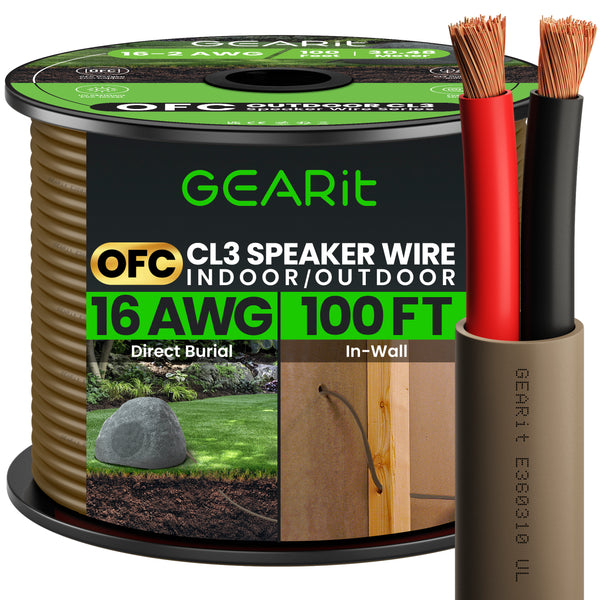
16 AWG Direct Burial Outdoor Speaker Wire - CL3 Rated - Oxygen Free Copper (OFC), Black
3 options
 6% off
GEARit
12/2 Outdoor Speaker Wire 12 Gauge CCA - CL3 Rated for Direct Burial in Ground
2 options
 15% off
 16% off
GEARit
10 AWG Direct Burial Outdoor Speaker Wire - CL3 Rated - Oxygen Free Copper (OFC), Black
2 options

GEARit
16/2 Outdoor Speaker Wire 16 Gauge CCA - CL3 Rated for Direct Burial in Ground
2 options
 15% off
GEARit
10/2 Outdoor Speaker Wire 10 Gauge CCA - CL3 Rated for Direct Burial in Ground
2 options

 5% off
 6% off
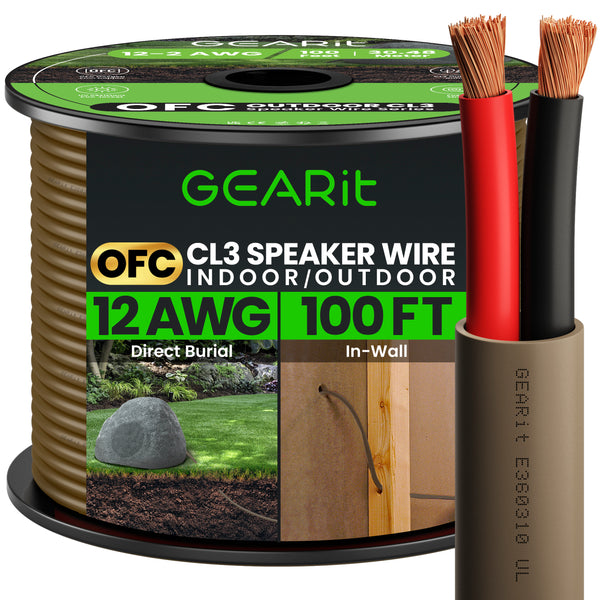 14% off
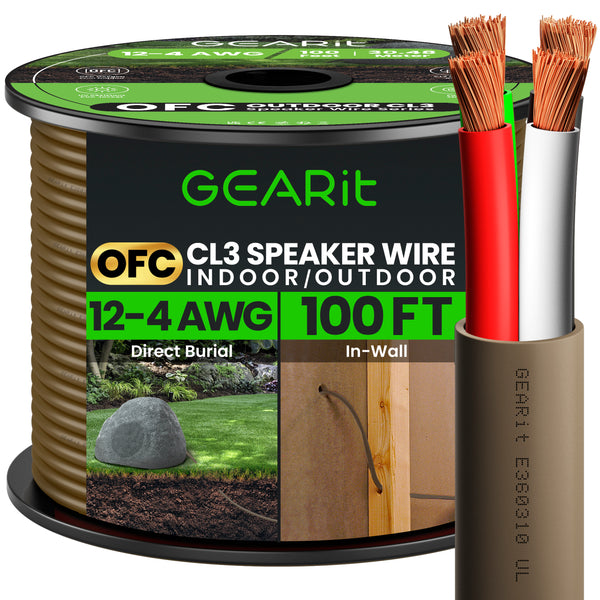 20% offOut of stock
FAQ
Questions buyers actually ask.
How deep should I bury the cable?
A minimum of 6 inches is recommended for standard landscaping areas. For zones that see foot traffic, lawn mowing, or occasional digging like garden beds, go 12 inches. Deeper burial protects against accidental cuts and insulates against temperature swings.
Do I need to use conduit with direct burial speaker wire?
No. Direct burial rated cable is designed to go straight into the ground without conduit. The CL3 jacket resists moisture, soil chemicals, and UV. If you ever want the option to pull and replace the cable without digging, running it through conduit makes that possible, but it is not required.
What is the best way to make a waterproof connection at the speaker end?
Use a gel-filled wire nut or a waterproof direct-bury connector rated for outdoor use. Avoid standard twist-on wire nuts for any connection that will be exposed to moisture or buried. Wrap the connection with self-fusing silicone tape as an additional layer of protection.
Can I splice two lengths together if my run comes up short?
You can, but it is not ideal. If you need to splice, use a waterproof direct-bury connector and bury the splice at least 6 inches deep. A continuous run is always better because each splice point is a potential failure and resistance increase over time.
My order has not arrived yet. How do I check the status?
Email support@gearit.com with your order number and we will check on it for you right away.