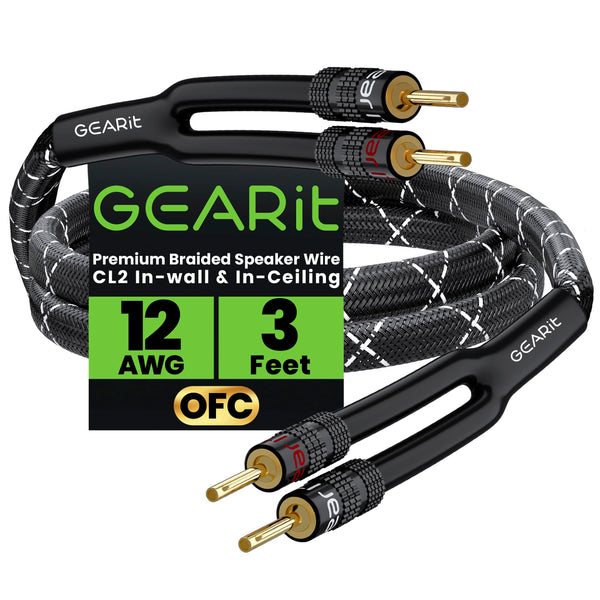
Home Theater Sweet Spot
14 AWG Speaker Wire
The most popular gauge for 5.1 and 7.1 home theater — handles 50–100 ft runs cleanly. OFC, CCA, CL2, CL3, and banana plug.
- Lifetime warranty
- Free shipping on orders $25+
- 30-day money-back guarantee
Shop the collection
14 AWG Gauge Speaker Wire Cable 13 products

Orders $25+ ships for free!

Earn GEARit rewards on every purchase

30-day money-back guarantee

lifetime warranty
Sort by:




Quick view
$9.99From $6.78
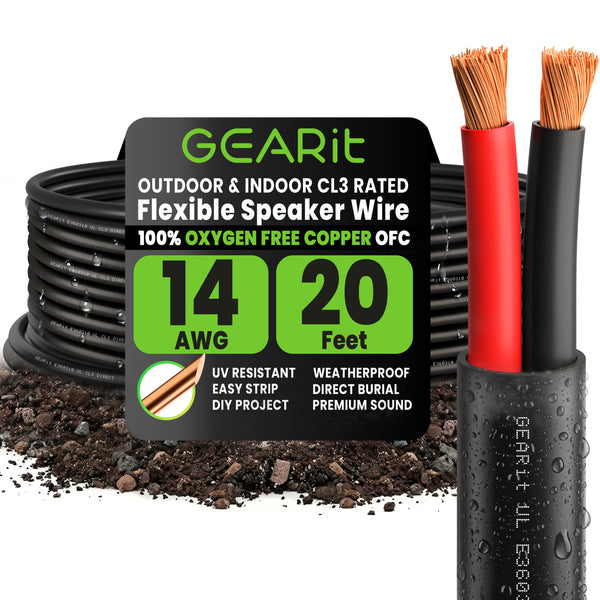
GEARit 14 AWG Speaker Wire with Banana Plugs – CL2 In-Wall Braided OFC Cable, 3–35 ft, Black & White
Description Ultra High Performance Clear, Rich and Detailed Sound Quick and easy installation for connecting a speaker to an A/V receiver or amplifier Maintain Best Audio and crisp clear sound...




Quick view
$118.99From $106.95
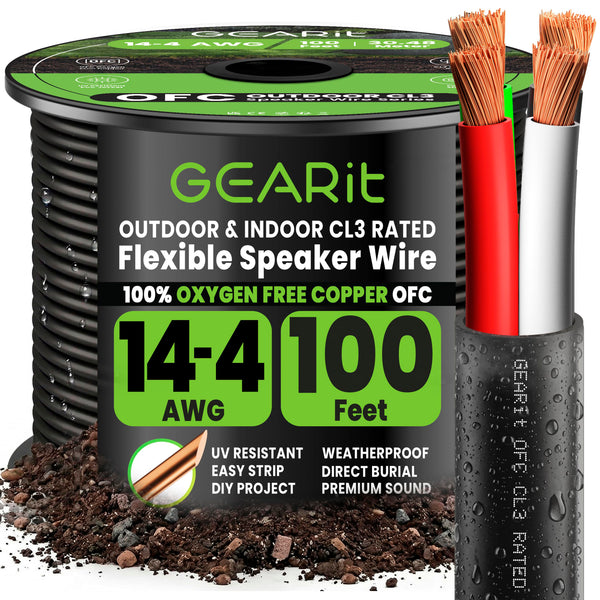
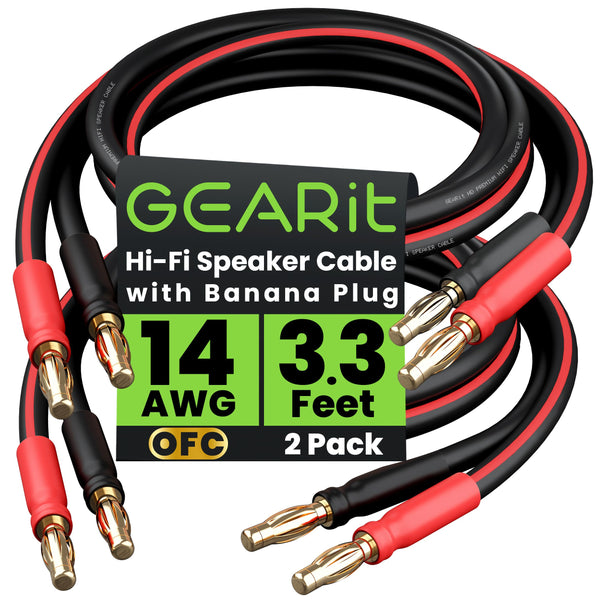
14 AWG In Wall Speaker Wire 4-Conductor Bi-Wire Cables - CL2 Rated - Oxygen Free Copper (OFC), White
Description Advantages of 4 Conductors Vs. 2 Conductors Speaker Wire Deliver the optimal amount of wattage to your home audio components begins by deciding the correct speaker wire conductor size....


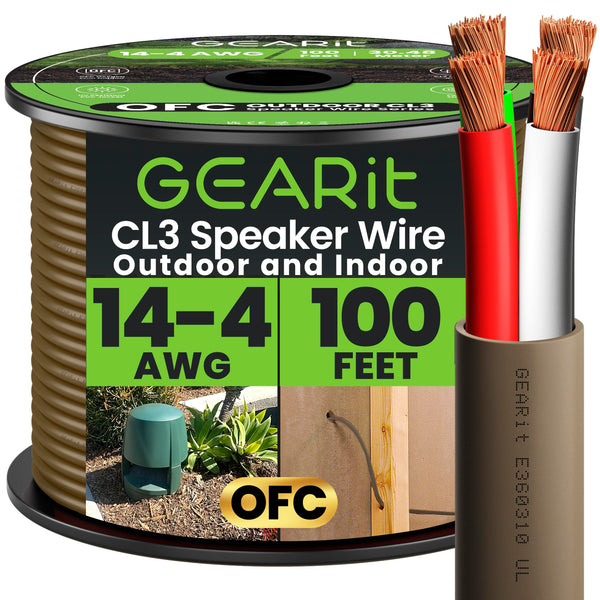


Overview
Why 14 AWG is the home theater standard
Buyer's guide
Not sure this is the right wire? Two questions decide it.
How long is the run and how much power the amp pushes. Use the picker, then choose the conductor.
1Pick the gauge
Gauge picker
Tell us the run. We'll size the wire.
Amplifier power per channel
·Or use the reference table
| Gauge | Best run length | Best for | Shop |
|---|---|---|---|
| 10 AWG | 150 ft+ | Subwoofers, whole-home, large outdoor | Shop → |
| 12 AWG | 100–150 ft | High-power amps, long runs | Shop → |
| 14 AWG | 50–100 ft | Home theater 5.1 / 7.1 | Shop → |
| 16 AWG | Under 50 ft | Bookshelf, rear surrounds | Shop → |
| 18 AWG | Short jumpers | Low-power, jumpers | Shop → |
- CL2 jacket for in-wall and in-ceiling runs
- CL3 jacket for outdoor or direct-burial runs
- Marine wire for boats, docks and salt air
- Step up one gauge if you're unsure
2Pick the conductor
OFC vs CCA: which conductor fits your install?
Recommended · OFC
OFC for home theater.
Longer runs to surrounds and higher receiver power benefit from pure copper's lower resistance.
Shop OFC speaker wire| Spec | OFC · Oxygen-free copperPick | CCA · Copper-clad aluminumPick |
|---|---|---|
| Conductor | Solid copper strands | Aluminum core, copper skin |
| Resistance | Lowest | Higher than OFC |
| Best run length | Long runs, 100 ft+ | Under 50 ft |
| Power handling | Any amp | Low to mid power |
| Best for | Home theater · in-wall · outdoor | Budget DIY · car audio |
FAQ
14 AWG Gauge Speaker Wire Cable questions, answered.
Why is 14 AWG considered the sweet spot for home theater?
14 AWG hits the right balance of resistance, flexibility, and cost for the run lengths most home theaters involve. For a standard room where speakers are 20 to 80 feet from the receiver, 14 AWG OFC keeps voltage drop well below audibility while being easy to route, terminate, and pull through walls.
Can 14 AWG handle a high-powered receiver rated at 150 watts per channel?
Yes, for runs under 75 feet. At 150 watts per channel with 8-ohm speakers, 14 AWG maintains resistance that keeps voltage drop under 5 percent at that distance. For longer runs or 4-ohm speakers at that power level, consider stepping up to 12 AWG.
Is 14 AWG CL2 rated for running inside walls and ceilings?
Yes. Our 14 AWG in-wall speaker wire carries a CL2 UL listing that meets the NEC requirements for permanent wall and ceiling installations. The rating is printed on the jacket for inspector verification.
What is the difference between 14/2 and 14/4 speaker wire?
14/2 means 14 AWG with 2 conductors, which handles one speaker connection (one positive and one negative). 14/4 has 4 conductors, which lets you run two speakers or a bi-amp connection through a single cable pull. 14/4 is popular for surround installs where you want both rear surrounds on one wall run.
Can I mix 14 AWG and 12 AWG in the same system?
Yes, that is common in practice. Many installers use 12 AWG for the longer front-stage runs and 14 AWG for shorter surround channels. The difference in gauge does not cause any electrical incompatibility.
Keep exploring