


Audiophile Pick · High-Power Amps
12 AWG Speaker Wire
The audiophile standard for 100–150 ft runs and high-power amplifiers. Available in CL2, CL3, marine, and banana-plug builds.
- ★ Lifetime warranty
- ★ Free shipping over $25
- ★ ETL listed · UL standards
Overview
Why 12 AWG is the enthusiast’s choice
Two-step picker
Two questions decide the right speaker wire.
How long is the run and how much power the amp pushes. Use the picker, then choose the conductor that fits the budget and the room.
1 Pick the gauge
2 Pick the conductor
1
Step 1 · Pick the gauge
Thicker wire = lower resistance = cleaner power.
Every foot of speaker wire adds a tiny amount of resistance between the amp and the driver. The longer the run and the higher the wattage, the thicker the conductor needs to be to keep voltage drop under 5%.
- Short runs (<50 ft): 16 AWG is plenty.
- Most home theaters: 14 AWG sweet spot.
- Long / high-power runs: step up to 12 or 10 AWG.
Interactive · gauge picker
Tell us the run. We'll size the wire.
5 ft
5 ft50100150200+ ft
Amplifier power per channel
Recommended
14 AWG OFC
OFC speaker wire
Short home-theater run — 14 AWG OFC is the sweet spot for 5.1 / 7.1.
Shop 14 AWG OFCTop picks
12 AWG Gauge Speaker Wire Cable — top picks.
 13% off
GEARit
12 AWG In Wall Speaker Wire - CL2 Rated - Oxygen Free Copper (OFC), White
3 options


GEARit
GEARit 12 Gauge Speaker Wire – 12/2 CCA Speaker Cable, 20–200 ft, Black, White & Translucent Colors
13 options


 66% off
GEARit
GEARit Marine Wire, Tinned Copper Boat Cable – 6, 8, 10, 12, 14, 16 AWG, 1 & 2 Conductor, 20/50/100/200 ft
23 options
 24% off
GEARit
12 AWG In Wall Speaker Wire 4-Conductor Bi-Wire Cables - CL2 Rated - Oxygen Free Copper (OFC), White
2 options

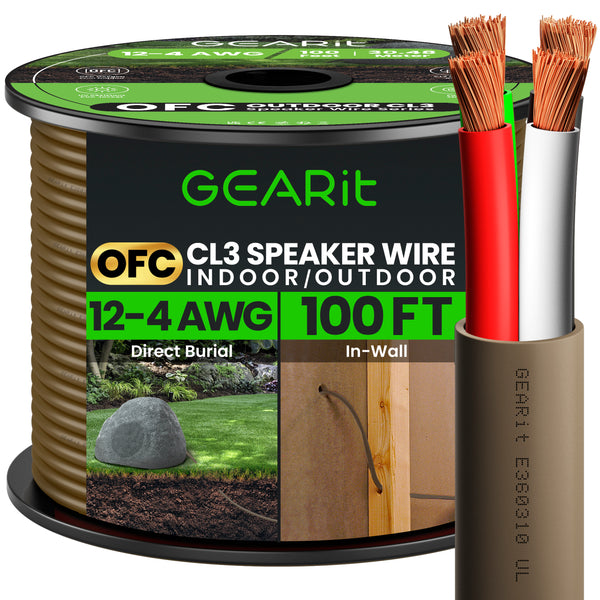 Out of stock
 33% off
GEARit
GEARit Speaker Wire with 12 Banana Plugs – 12, 14 or 16 Gauge CCA, 50 or 100 ft, Black, 6-Pair Kit
6 options
FAQ
Questions buyers actually ask.
What is the maximum run length for 12 AWG speaker wire?
With 8-ohm speakers and a standard home theater receiver, 12 AWG OFC handles runs up to 200 feet while keeping voltage drop under 5 percent. For 4-ohm speakers or high-power amplifiers over 200 watts per channel, keep runs under 150 feet for best performance.
Is 12 AWG the right choice for a 5.1 home theater system?
Yes, 12 AWG is a strong choice for a 5.1 system, especially for the front left, center, and right channels which typically carry the most demanding content. For surround channels under 30 feet at moderate power levels, 14 AWG is equally good and easier to route.
How does 12 AWG compare to 14 AWG in real-world listening?
The difference is most noticeable on runs over 50 feet and with amplifiers above 100 watts per channel. At shorter distances and moderate power, both gauges perform very similarly. If you are building a system you plan to keep and upgrade over time, the extra cost of 12 AWG is a reasonable investment.
Does 12 AWG work with Dolby Atmos ceiling speakers?
Yes. Ceiling Atmos speakers are typically driven at lower levels than main channels, so 14 AWG is sufficient for most ceiling runs. That said, 12 AWG works fine if you prefer consistency across your install or if the ceiling runs are long.
What is the best way to label speaker wire runs during installation?
Use adhesive cable labels or colored electrical tape at both ends of each run before closing up walls. Label the room, channel (LF, RF, C, LS, RS), and gauge. This saves significant time if you ever need to troubleshoot or extend the system later.